Do you know why top performance marketers and brands still choose native advertising over other types of ads?
This is the reason: native advertising blends paid content with the look and feel of the platform where it appears. Unlike banner ads, native ads match editorial style and deliver value to readers, resulting in 53% more views and 18% higher purchase intent than display ads.
This guide covers 13 native advertising examples across formats and industries, plus the data behind why they work.
Key takeaways
- Native advertising spans multiple formats, from recommendation widgets to premium publisher partnerships to social integrations
- The best campaigns lead with value for the audience, not brand promotion
- Clear disclosure builds trust and does not hurt performance
- Performance data consistently shows native outperforming traditional display on engagement metrics
- Both B2C and B2B brands can benefit from strategic native advertising
- Native ads achieve 0.38% CTR on mobile versus 0.11% for banner ads
- 75% of consumers trust native ads on editorial sites
- Six main types exist: in-feed ads, recommendation widgets, sponsored content, paid search, promoted listings, and native video
- Disclosure labels like "Sponsored" or "Paid Content" are legally required by the FTC
- Lead with value, not promotion. Create content people would engage with even if it weren't sponsored
- Besides clicks, track engagement time, scroll depth, and downstream conversions to capture native's full impact
13 native advertising examples
Now let us look at 13 native advertising examples across formats, industries, and platforms. We have organized these by category so you can find examples relevant to your goals.
1. Lifesum

- Company type: App & Health
- Webpage type: News
- Ad title: The objective language makes it feel like you’re learning about a health trend or international innovation—something fresh and reliable from Sweden.
- Ad image: A joyful woman with open arms outdoors reinforces positivity and aligns with the lifestyle and wellness topic.
- Why does it work: This ad is great for online news pages because it feels like a piece of lifestyle news—something new to learn about. It fits into the reading flow, making it relevant and clickable.
2. Miracle Made

- Company type: Bedding
- Webpage type: News
- Ad title: The title uses authority (“Dermatologist Says”) and curiosity (“Here’s Why”) to grab attention, while the negative framing (“Do Not Buy”) creates a sense of urgency and encourages readers to find out more.
- Ad image: A relevant photo showcasing a close-up of clean, inviting bedding, which matches the topic. It makes readers think about comfort and how clean your sheets are.
- Why does it work: This ad captures the seamless browsing experience on a news page by combining authority, curiosity, and a theme of new discoveries.
3. Blinkist

- Company type: App & e-learning
- Webpage type: News
- Ad title: It grabs attention by mentioning an important public figure (Co-Founder of Google) and teases value with five book recommendations.
- Ad image: The image of Andrew Ng adds credibility and recognition, appealing to readers who are interested in tech and business.
- Why does it work: The content feels approachable and helpful. It combines a trusted expert, his insight, and book recommendations—targeting the right audience who would want to gain more knowledge in tech and personal growth.
4. Home & Texture

- Company type: Home & interior design
- Webpage type: News
- Ad title: The title hooks you right away—who wouldn’t want to sneak a peek at Elon Musk’s $50,000 tiny house? It’s an unusual and intriguing topic.
- Ad image:
- Why does it work: This ad combines a celebrity everyone knows with an unexpected article topic, similar to what you would find in entertainment news. This appeals to readers into celebrity, lifestyle, and design.
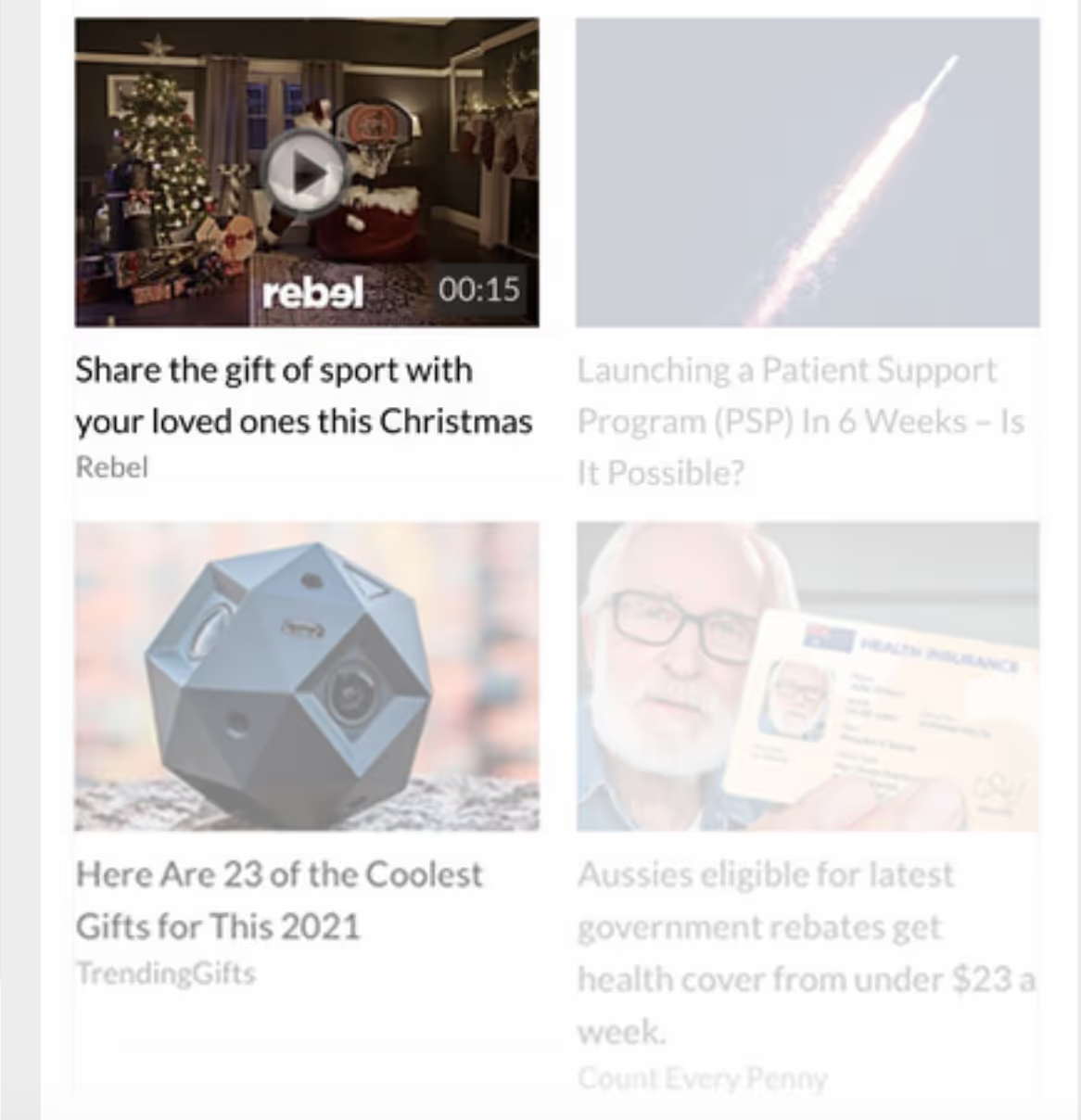
5. Rebel
- Company type: Sports & fitness
- Webpage type: News
- Ad title: It’s seasonally relevant, emphasizing the holiday spirit and emotional value of gifting. It connects with audiences by suggesting a thoughtful gift idea.
- Ad video: A video of a cozy, vivid Christmas setting invites people to click and watch. It depicts a festive, heartwarming moment that is ideal for family-oriented audiences.
- Why does it work: This ad leverages seasonal timing, emotional appeal, and an actionable idea (gift of sport) that would resonate with readers looking for gift ideas.
6. Hello Inside

- Company type: Health & wellness
- Webpage type: News
- Ad title: A common quote format often seen on news websites, making it blend seamlessly with editorial content.
- Ad image: The image of a smiling, healthy woman suggests success and wellness. It visually reinforces the headline as it is a personal, trustworthy testimonial.
- Why does it work: This ad nails it by looking like a personal success story in online news. The quote and “free guide” attract attention, and the image seals the deal.
7. Ark Invest

- Company type: Investment management
- Webpage type: Finance & business
- Ad title: The title is straight to the point and appealing to readers of the website, MarketWatch. It’s clear and investment-focused.
- Ad image: An image of a robotic arm that looks futuristic and innovative, attracting tech-focused investors.
- Why does it work: It connects with the webpage audience—tech-savvy investors—by merging a timely trend with a simplified investment strategy. It taps into the hype around AI while offering a simple way to get in.
8. Sharesight

- Company type: Investment tool
- Webpage type: Finance & business
- Ad title: The title directly addresses the needs of investors on the MarketWatch by promising an all-in-one solution for tracking stocks, ETFs, and dividends.
- Ad image: The dashboard looks clean and professional, showing how easy it is to use on phone or computer.
- Why does it work: It’s simple, relatable, and not in-your-face. The modest visuals and clear message make it feel helpful rather than pushy, good for connecting with investors instead of disturbing their reading experience.
9. Homage

- Company type: Home care service
- Webpage type: News
- Ad title: It mimics the style of a social news headline, blending naturally with editorial content.
- Ad image: The photo feels real and heartwarming—a senior and a caregiver smiling together. It looks like a positive and authentic photograph rather than a staged ad.
- Why does it work: This ad resembles a social news piece, making it feel like part of the content. The relatable image and trend-focused title make it engaging and trustworthy for readers interested in elder care solutions.
10. Marley Spoon

- Company type: Meal kit service
- Webpage type: Lifestyle media
- Ad title: This title works so well because it feels like a local news story. “People in Piscataway” makes it sound personal, relevant, and community-focused.
- Ad image: It looks like a visual featured in a lifestyle or food section, reinforcing the feeling of a lifestyle news story about a popular trend.
- Why does it work: It mimics the format of a local interest article. The combination of a community-specific title and relatable, inviting visuals makes it feel more like editorial content than an ad.
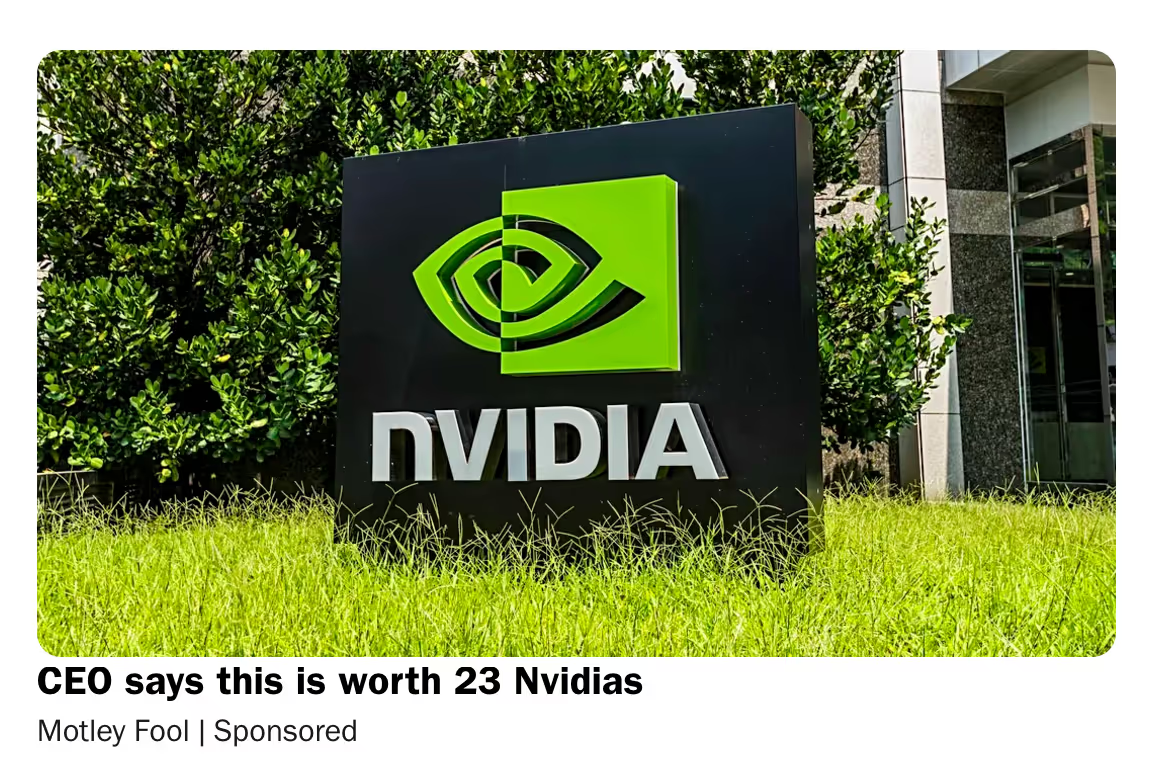
11. Motley Fool
- Company type: Investing advice company
- Webpage type: Lifestyle media
- Ad title: The title is intriguing—it’s bold, mysterious, and makes you want to know what’s “worth 23 Nvidias.” It draws in a finance-savvy audience, making it feel like a market tip.
- Ad image: The image of Nvidia’s logo in a natural setting is subtle and editorial. It looks like an accompanying visual for a news article rather than an obvious ad, enhancing its native appeal.
- Why does it work: It blends seamlessly with news content. The combination of a curiosity-driven title and a familiar, respected brand image captures attention.
12. All Nippon Airways
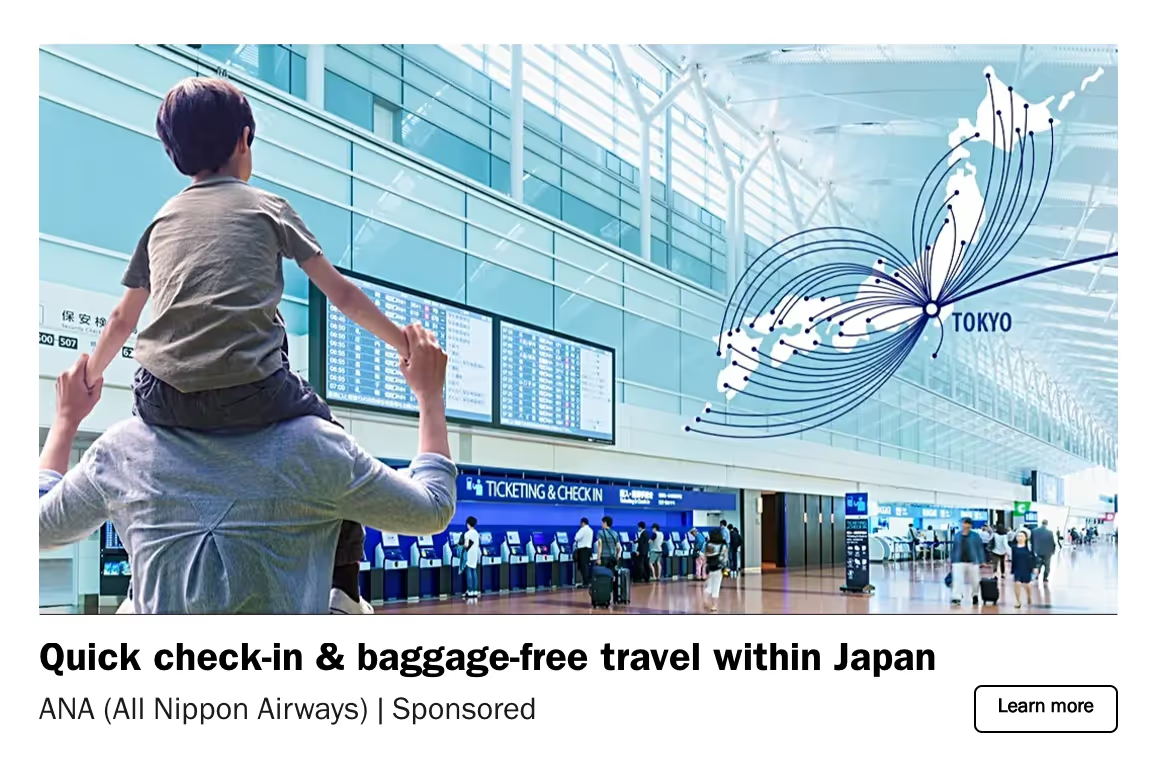
- Company type: Airlines
- Webpage type: Lifestyle media
- Ad title: It offers practical value (“quick check-in & baggage-free travel”) while blending seamlessly with Timeout’s travel-related content.
- Ad image: The picture feels warm and relatable, showing a parent and child in a modern airport. It’s about making travel easy and stress-free, which clicks with family travelers.
- Why does it work: Fitting into the lifestyle and travel content of the webpage, this ad seems like a travel tip. It catches the attention of readers looking for smooth experiences.
13. Secret Scope
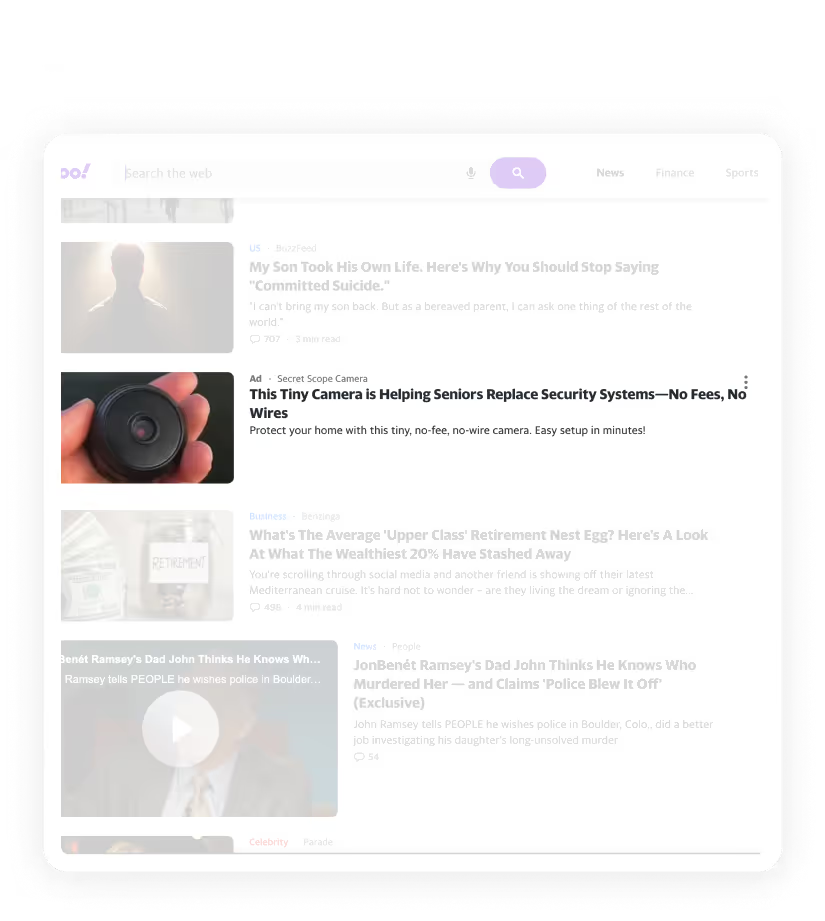
- Company type: Security camera
- Webpage type: News
- Ad title: The title seems more like a tip or advice than a hard sell, which blends in the editorial content. It talks about solving a common issue in a way that feels natural and helpful.
- Ad image: The image of the product is modest and informative, showing the product in action without flashy branding.
- Why does it work: The straightforward title and non-intrusive visuals make it blend naturally into the user’s browsing experience, increasing the likelihood of engagement.
{{ad-library}}
What is native advertising?
Native advertising is paid content designed to match the look, feel, and function of the platform where it appears. The ad blends into surrounding editorial content while remaining clearly labeled as sponsored.
A simple native advertising example: a sponsored article on The New York Times that reads like regular journalism but displays a "Paid Post" label. The content provides genuine value to readers while promoting a brand.
According to Dale Lovell, the author of Native Advertising: The Essential Guide: "Native advertising is a form of paid media where the advertisement is relevant to the consumer experience, integrated into the surrounding content, and is not disruptive."
How native advertising differs from content marketing
Native advertising distributes content through third-party platforms to reach new audiences. Content marketing builds owned platforms like company blogs and email lists. Smart marketers use both: content marketing for foundational trust, native advertising for strategic audience expansion.
Here’s the core principle: Provide value first, promote subtly. Native ads succeed when readers engage with the content, even if it was not sponsored.
Native advertising evolved from print advertorials in magazines to today's sophisticated digital formats. Modern native spans sponsored articles, social media posts, recommendation widgets, video content, and interactive experiences across thousands of publishers and platforms.
Why native advertising works
Native ads outperform traditional display advertising on nearly every engagement metric. Here is what the research shows, done by Outbrain, IAB Native Advertising Report 2026, and Nielsen Trust in Advertising Study.
Performance compared to display ads
Trust and engagement
According to eMarketer's 2026 report, 75% of consumers trust native ads on editorial sites compared to just 54% who trust ads on social media platforms.
Native ads feel informative rather than intrusive. Users perceive them as content worth consuming rather than interruptions to ignore.
Market size and growth
The native advertising industry continues to experience rapid expansion:
- Global market projected at $103 billion in 2025
- Expected to reach $733 billion by 2035 (21.7% CAGR)
- U.S. programmatic display ad spend approaching $180 billion
- Native formats now account for the majority of in-feed digital advertising
Key insight to note: Native advertising works because it respects user experience. By matching platform expectations and delivering genuine value, native ads overcome the "banner blindness" that plagues traditional display advertising.
Types of native advertising
The Interactive Advertising Bureau (IAB) recognizes several core native ad formats. Understanding each helps you identify which works best for your goals.
How to identify native advertising
Native ads blend into content by design, but regulations require clear disclosure. Here is how to spot them.
Disclosure labels to look for
- "Ad" or "Advertisement"
- "Sponsored" or "Sponsored Content"
- "Paid Content" or "Paid Post"
- "Promoted" or "Promoted by"
- "Presented by" or "In partnership with"
- "From our sponsors"
Where disclosures appear
Disclosures typically show above or before the headline, in the byline area, at the top of the article, or within thumbnails on recommendation widgets.
Visual cues
Beyond text labels, native ads often feature:
- Different background color or subtle border
- Brand logo prominently displayed
- "From around the web" sections at article bottoms
- Styling slightly different from surrounding editorial
FTC requirements
The Federal Trade Commission requires that disclosures be clear and prominent. Labels cannot be buried in fine print. Disclosures must appear before users click through and also on the destination page.
The FTC recommends terms like "Ad," "Advertisement," or "Sponsored Advertising Content." The agency cautions against vague terms like "Promoted" alone and advises against "Presented by" when advertisers created the content.
Key insight to note: Transparent disclosure builds trust. Research shows that clear labeling does not hurt performance when content delivers genuine value. Readers appreciate honesty and engage more favorably with brands that respect their intelligence.
Native advertising platforms and networks
Different platforms serve different goals. Here is where to run native advertising campaigns based on your objectives.
Content recommendation networks
Social platforms
Programmatic native
Publisher studios
What makes native advertising effective
The best native campaigns follow proven principles that balance promotional goals with genuine audience value.
Lead with value, not promotion
The best native ads educate, entertain, or solve problems first. Brand promotion comes second. Ask yourself: would someone engage with this content even if it were not sponsored?
Match the platform's tone and style
Native ads should feel like they belong. Study the publisher's editorial voice, visual style, and audience expectations before creating content. A native ad that looks out of place performs like a banner ad.
Invest in headlines and thumbnails
For recommendation widgets, headlines and images account for most of the CTR variance. Test multiple variations and optimize based on performance. Small improvements in click-through compound into significant traffic gains.
Keep disclosure clear but not distracting
Transparent labeling builds trust. Research shows that clear disclosure does not hurt performance when content delivers genuine value. Hiding sponsorship damages long-term brand reputation.
Design for mobile first
Mobile native CTR (0.38%) significantly outperforms desktop (0.16%). Create content with mobile consumption in mind, including vertical video, scannable text, and thumb-friendly interactions.
Refresh creative regularly
Native campaigns experience fatigue like any other format. Plan to refresh creative every two to four weeks for sustained performance. Monitor frequency to avoid overexposure.
Measure beyond clicks
Track engagement time, scroll depth, and downstream conversions. Native advertising often influences users who do not click immediately but convert later through other channels.
Native advertising vs. display advertising
Understanding when to use each format helps you allocate budget effectively.
When to use native advertising
- Building brand awareness with new audiences
- Establishing thought leadership in your industry
- Distributing content to drive leads
- Reaching users in a discovery mindset
When to use display advertising
- Retargeting warm audiences who already know your brand
- Promoting sales, offers, or time-limited campaigns
- Achieving broad reach at low cost
- Running simple direct response campaigns
Check out this blog for display ad examples.
Is native advertising controversial?
Native advertising raises ethical questions that marketers should understand and address. Here are a few things to consider when making that judgment:
The concern
Critics argue that native advertising blurs the line between editorial content and paid promotion. Readers may not notice disclosure labels and could be deceived into thinking sponsored content is objective journalism.
The counterargument
When executed ethically with clear disclosure, native advertising provides value to readers while supporting publisher revenue. The format itself is not deceptive. Poor execution and hidden sponsorship are the problems.
Regulatory response
The FTC requires clear and prominent disclosure. Labels must appear before users click and on destination pages. Terms like "Promoted" alone may be considered too vague.
New York enacted an AI disclosure law effective June 2026, requiring advertisers to disclose when ads feature AI-generated "synthetic performers."
Made-for-advertising sites
A legitimate concern in native advertising is MFA (made-for-advertising) sites. These properties exist solely to generate ad impressions through clickbait headlines. According to the Association of National Advertisers, MFA sites account for 21% of programmatic impressions, wasting advertiser spend and damaging trust.
The ethical path forward
- Always use clear disclosure labels
- Create content that genuinely serves the audience
- Partner with reputable publishers
- Avoid sensationalized or misleading headlines
- Measure quality engagement, not just clicks
- Exclude MFA sites from programmatic buys
The bottom line is that native advertising is not inherently deceptive. Like any marketing format, it can be done well or poorly. The key is transparency and genuine value creation.
Conclusion
Native advertising works because it respects user experience while delivering brand messages. By matching platform expectations and providing genuine value, native ads overcome the banner blindness that limits traditional display advertising.
The global native advertising market is projected to reach $733 billion by 2035. As banner blindness increases and privacy regulations limit targeting, native formats that deliver genuine value will become increasingly important.
The best native advertising does not feel like advertising at all. It feels like content worth consuming. When you lead with value and respect your audience's time, native ads become a win for brands, publishers, and readers alike.
As Dale Lovell once said: "You cannot bore people into buying your product; you can only interest them in buying it. How do you interest people? Make it personal to them. And one of the best ways to do this is to tell them a story.”
If you need some extra help with ad creative creation, feel free to reach out Team magier. They work like a part of your marketing team and generate winning ad creatives within 48-hours.
{{redirect}}
FAQs
What’s the difference between native ads and display ads?
Native ads don’t look like typical ads. The goal of native ads is to integrate seamlessly with the platform’s content, offering a non-disruptive, engaging experience. Display ads are standalone banners or images designed to stand out but can feel intrusive. Native ads focus on content, storytelling, and value, while display ads emphasize direct visibility and call to action.
Which industries benefit most from native advertising?
Native ads work well for media, e-commerce, finance, health, travel, and tech industries. Successful apps and SaaS companies also use them to boost user acquisition and engagement, blending educational or problem-solving content into blogs, social media, or publisher platforms.
How much should I budget for native advertising campaigns?
Native ad costs vary based on platform and reach. On content discovery networks like Outbrain or Taboola, expect to spend $0.20-$1.00 per click. This can be a good start for small businesses with a $500–$1,500 monthly budget, and with $2,000-5,000, you might gather some meaningful data. Tailoring your budget to campaign goals (e.g., brand awareness vs. lead generation) is essential.
What are common native advertising mistakes to avoid?
Don't oversell or use clickbait headlines that cause disappointment and damage trust. Avoid generic stock photos that look inauthentic Don't just reuse the same content across different platforms without customizing them. Don’t make ads too promotional, as this reduces click rates and engagement.
What is native advertising, with an example?
Native advertising is paid content designed to match the look and feel of the platform where it appears. For example, a sponsored article on The New York Times that reads like regular journalism but is labeled "Paid Post" is native advertising. The content provides value to readers while promoting a brand. Unlike banner ads, native ads blend into the user experience rather than interrupting it.
How can you tell if an article is native advertising?
Look for disclosure labels like "Sponsored," "Paid Content," "Ad," or "Promoted." These labels typically appear above the headline or in the byline area. You may also notice a different background color, a brand logo, or placement in "Recommended for you" sections at the bottom of articles. The FTC requires all native advertising to include a clear disclosure.
What are the different types of native advertising?
The main types include in-feed ads (social media sponsored posts), content recommendation widgets (Taboola, Outbrain), sponsored or branded content (publisher partnerships), paid search ads (Google, Bing), promoted listings (Amazon, e-commerce), and native video. The IAB categorizes these into three core formats: In-Feed/In-Content, Content Recommendation, and Branded Content.
Why is native advertising controversial?
Some critics argue that native advertising can deceive readers by blurring the line between editorial and paid content. However, when properly disclosed and executed with genuine value, native advertising is considered ethical. The FTC requires clear labeling, and reputable publishers maintain strict standards. The controversy typically stems from poor disclosure practices rather than the format itself.
How much do native ads cost?
Costs vary widely by platform and format. Content recommendation networks like Taboola and Outbrain typically charge $0.30 to $1.50 per click. Sponsored content with premium publishers can range from $10,000 to $500,000 or more depending on the publication and scope. Social native ads follow standard platform pricing models based on bidding and targeting.
Are native ads more effective than display ads?
Data suggests native ads outperform display on most engagement metrics. Native achieves 0.38% CTR on mobile versus 0.11% for banners, generates 18% higher purchase intent, and is 53% more likely to be viewed. However, display ads may still work better for retargeting and direct response campaigns where users already know your brand.
What platforms are best for native advertising?
The best platform depends on your goals. For broad content distribution, Taboola and Outbrain reach hundreds of millions of users. For B2B audiences, LinkedIn sponsored content targets professionals. For premium brand positioning, publisher studios like NYT T Brand Studio or Forbes BrandVoice offer credibility. For e-commerce, Amazon Sponsored Products drives direct sales.