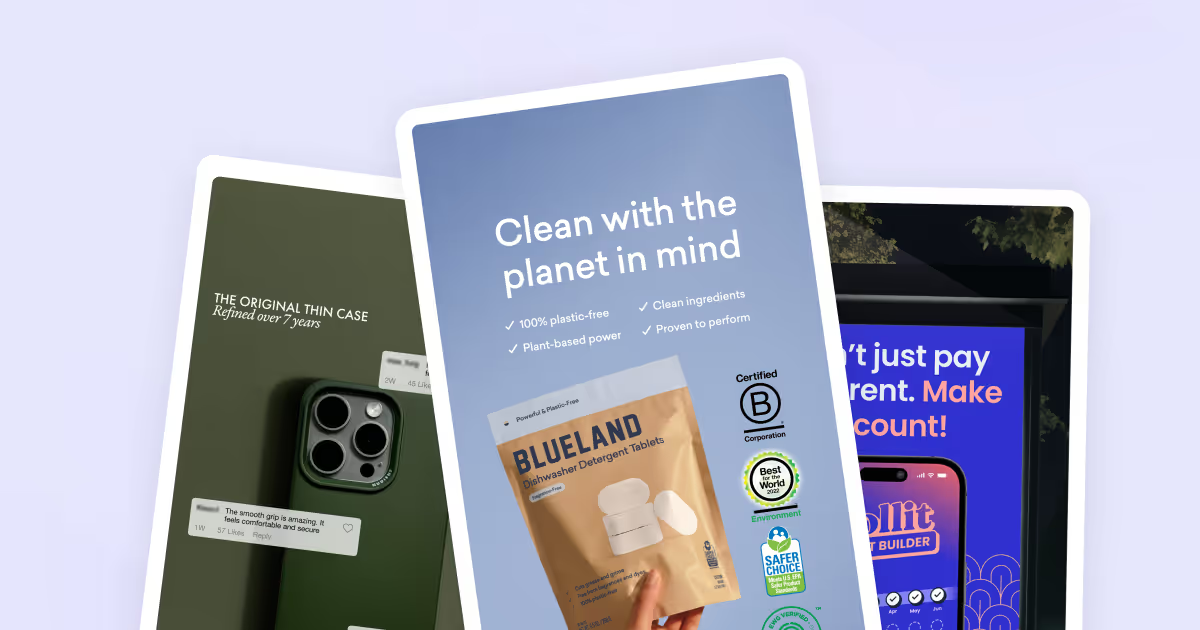
Whether you're running ads for a D2C brand, SaaS product, or mobile app, the best Facebook ad examples share common traits: strong hooks, clear value propositions, and creative that stops the scroll.
When crafting a successful Facebook ad campaign, every detail matters — from copy and visuals to targeting the right audience. However, among these elements, the ad graphic holds a unique power. It's the first thing users see, and it plays a critical role in grabbing attention and encouraging further action.
In this guide, we'll break down real Meta ad examples across industries, including e-commerce, fintech, and B2B, and show you what makes each one work. Here we’ll cover:
- Best Facebook ad examples
- Facebook ad types
- Strategies that make a Facebook ad effective
- Do’s and don’ts
- Metrics to track for Facebook ads
- Tools to help with ad creation
- Competitor research and retargeting strategies
Let’s dive in!
Best Facebook ad examples by industry and hook type
1. monday.com
Hook type: Problem-solution / benefit-focused
- Industry: SaaS
- Ad type: Benefit-focused / problem-solution ad
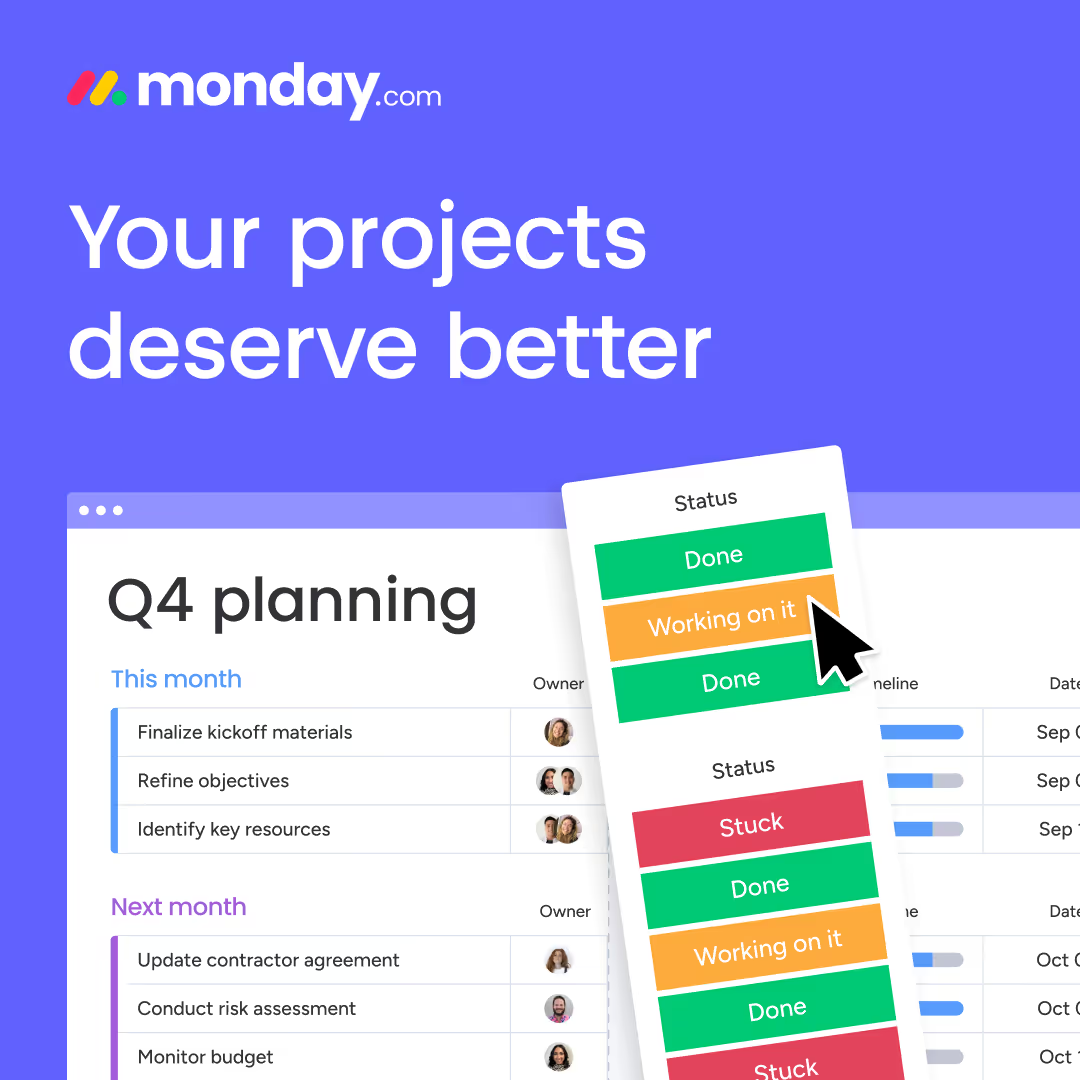
- Visual: The clean design and bright colors really pop. The use of interface elements is simple but gets the point across, showing how the tool works with clickable buttons. No extra fluff, just enough to grab attention and deliver clear messages.
- CTA: Sign up
- What's good about this ad: It combines a pain point with a clear solution presented visually. The headline, "Your projects deserve better," speaks directly to user frustrations and encourages action. Coupled with a visual demonstration of the software, it creates a value proposition, encouraging clicks and conversions. The headline uses the word "Your", which is a personalization trigger that increases relevance.
2. Afterpay
Hook type: Relatable scenario / conversational
- Industry: App
- Ad type: Problem-solution ad
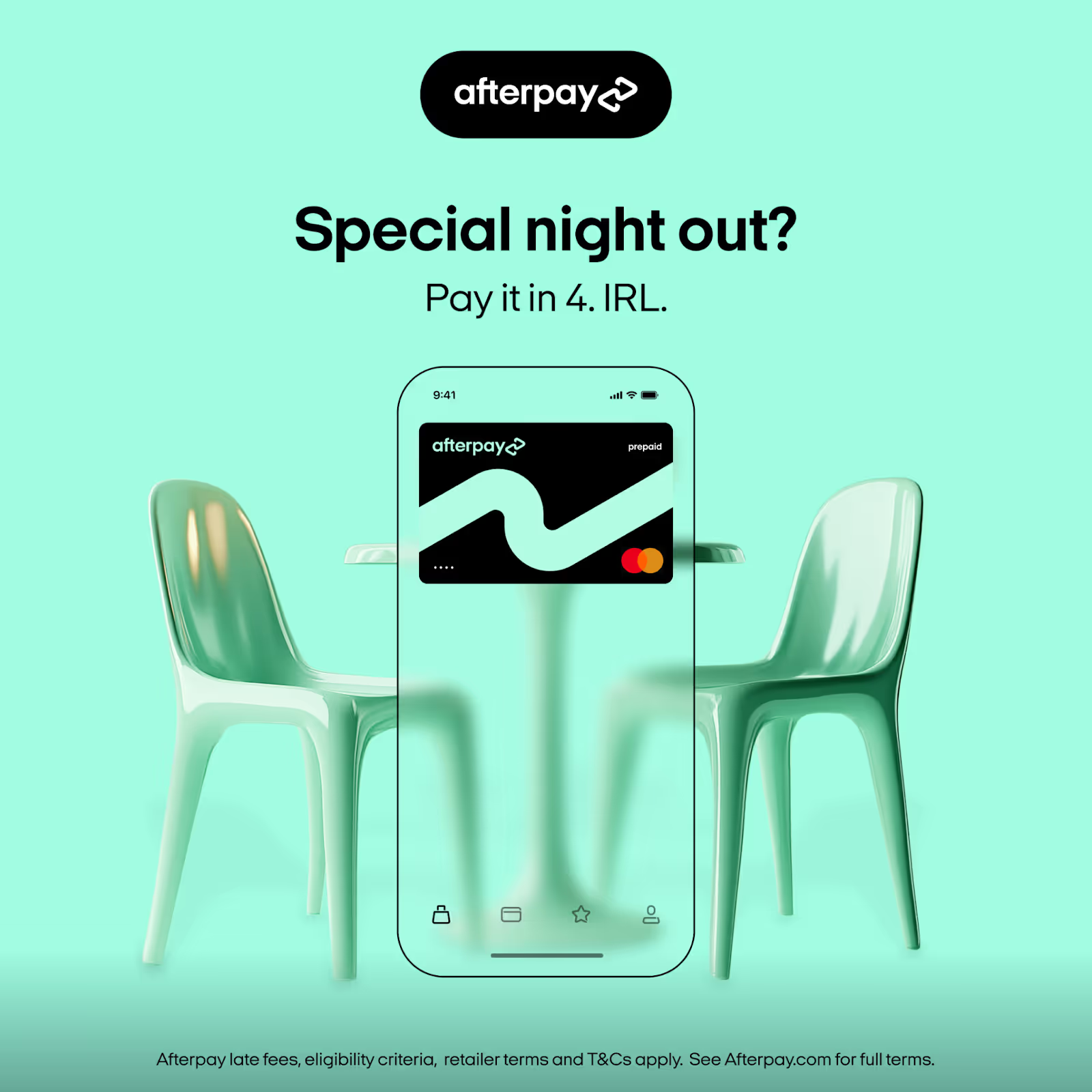
- Visual: The ad stands out with its minty green color scheme, symmetrical layout, and minimalist design. The green background aligns with the brand colors, while the Afterpay card graphic takes center stage, grabbing attention.
- CTA: Book now
- What's good about this ad: This ad connects with the audience by tapping into relatable, common situations like a "special night out." The "Pay it in 4. IRL." line is clever and conversational, making the message feel approachable. It highlights the benefit of flexible payments while keeping the tone casual and easy to understand. This is a classic urgency-lite approach — suggesting action without aggressive scarcity tactics.
3. Stripe
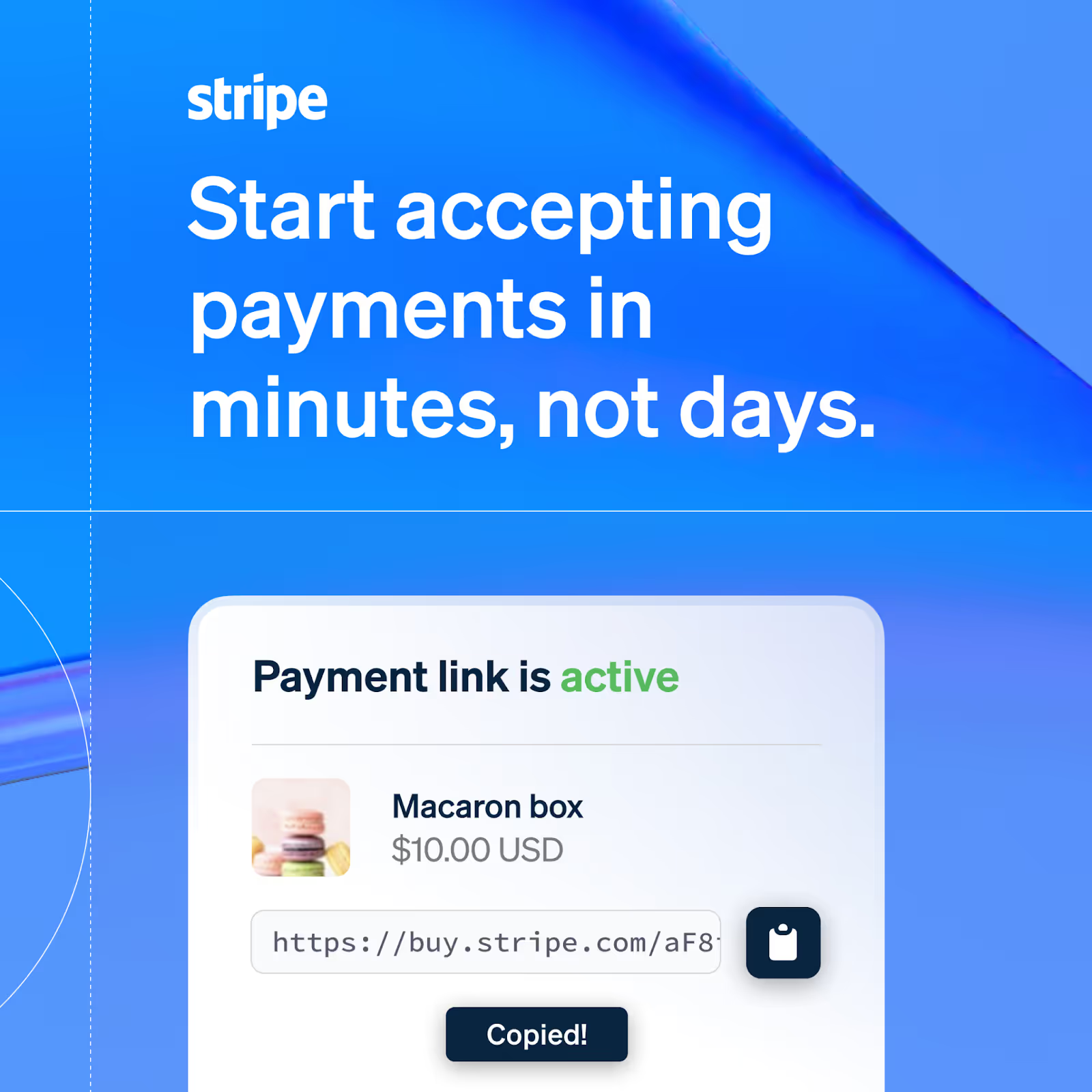
Hook type: Speed/simplicity promise
- Industry: SaaS
- Ad type: Benefit-focused ad
- Visual: This ad keeps it simple and sharp, with a smooth blue gradient that feels professional yet approachable. The headline and the visual below together make it clear what Stripe can do. It's clean, modern, and easy on the eyes.
- CTA: Sign up
- What's good about this ad: The headline speaks directly to small businesses and creators looking for quick solutions. It's straight to the point, and the visual of the payment link being copied mimics the solution in action, making it feel real and practical. "Minutes, not days" is a stat-led hook that quantifies the benefit immediately.
4. The Ordinary
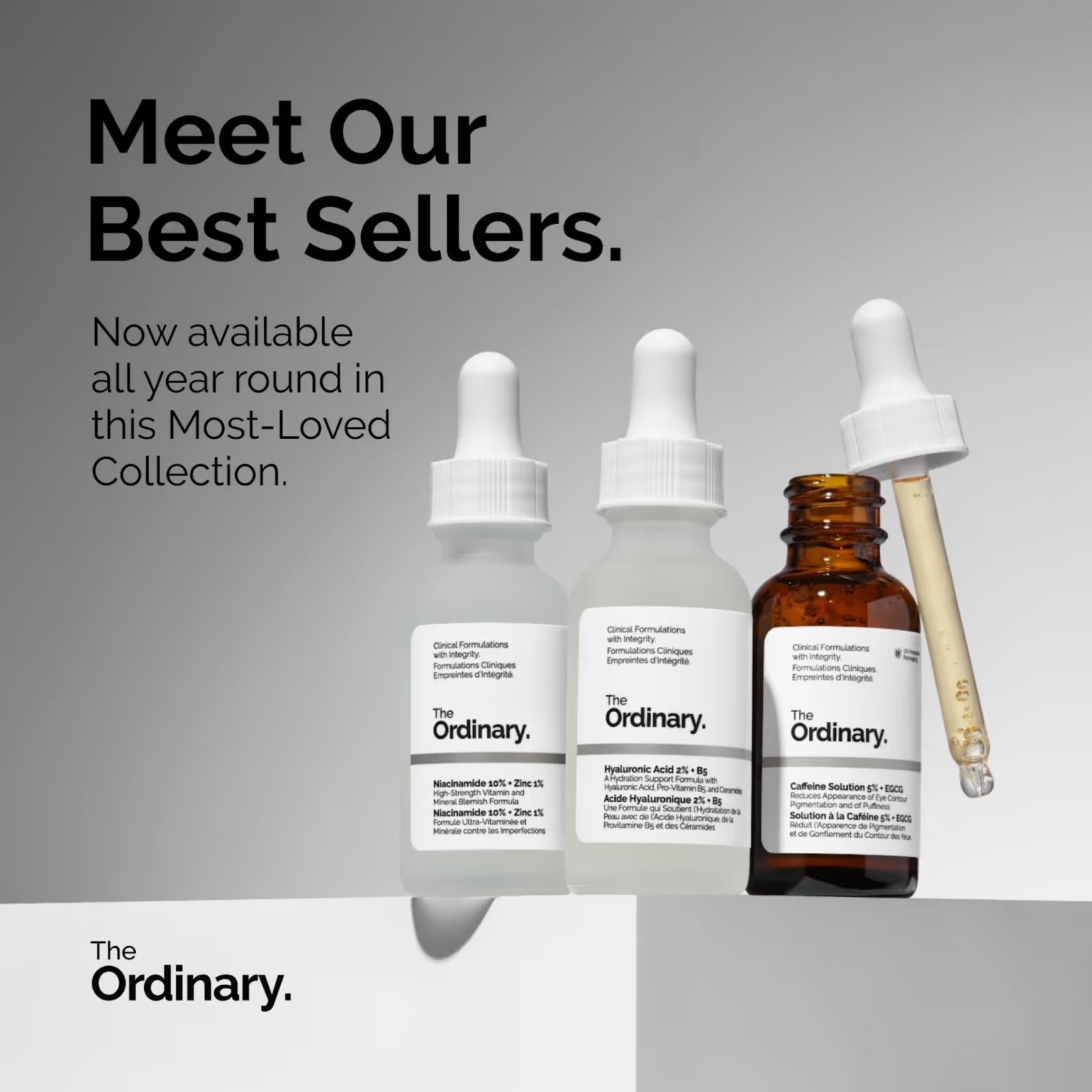
Hook type: Social proof / best-seller callout
- Industry: E-commerce
- Ad type: Announcement ad
- Visual: The minimalist design with a neutral gray background aligns with the brand's identity. The clean layout, combined with simple product images, exudes a natural, professional, and trustworthy vibe. The shadows and gradient background add depth, making the products stand out.
- CTA: Shop now
- What's good about this ad: The headline highlights the brand's "best sellers" with confidence. The phrase "Most-Loved Collection" taps into the audience's desire to choose what others already trust. The simple, approachable tone is great for attracting the attention of first-time buyers. This leverages social proof, which is one of the most powerful psychological triggers in advertising.
🙋🏻♀️ Want to have stunning visuals like these for your ad campaigns but don’t have enough team support? magier can be your perfect design partner! Book a free consultation with us to explore your options.
5. Blueland
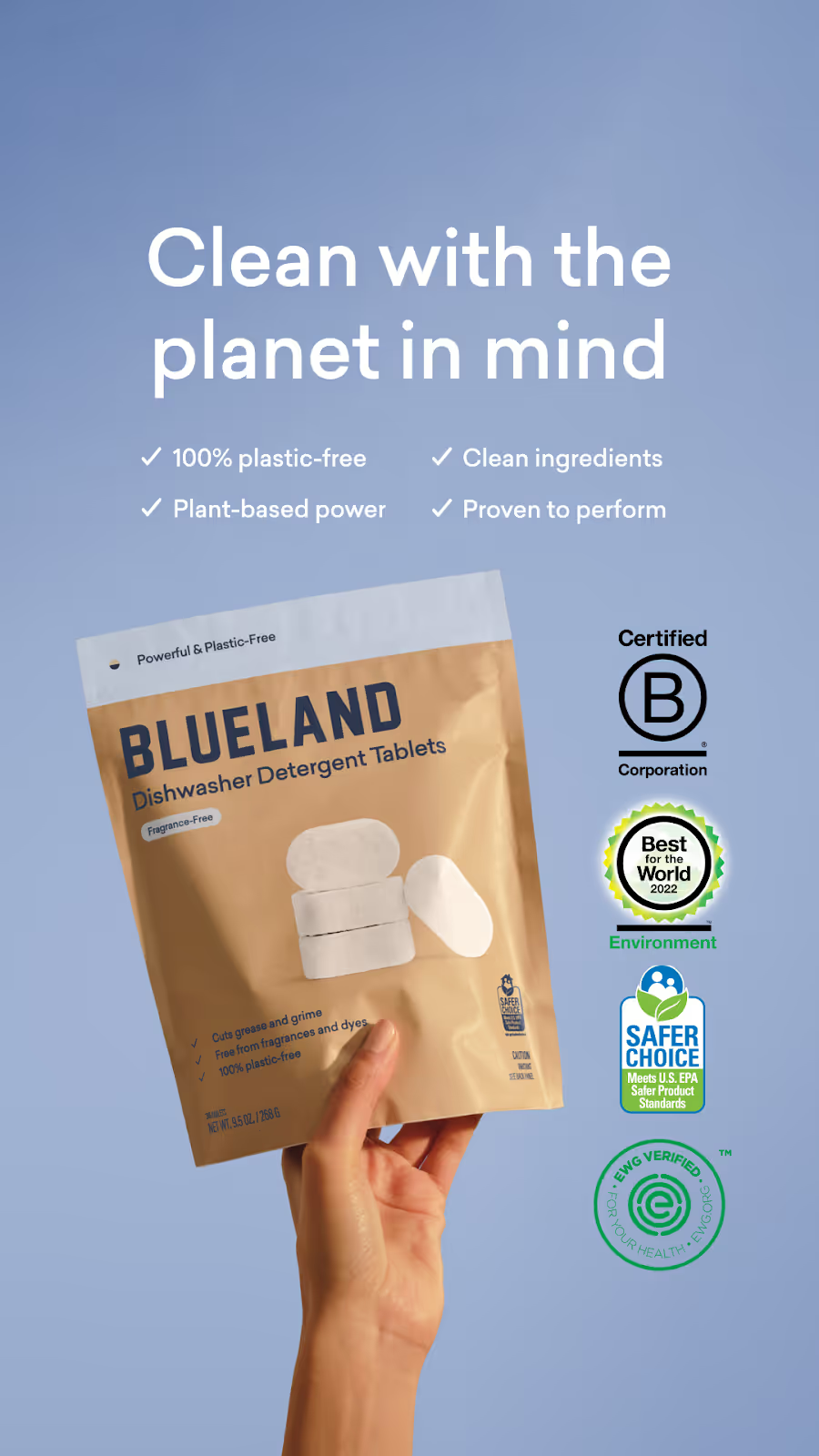
Hook type: Value-driven / trust badges
- Industry: E-commerce
- Ad type: Feature callout ad
- Visual: The clean layout and subtle colors create a sense of calmness and environmental awareness. The hand holding the product adds a human touch, while the simple product image reinforces the natural, sustainable approach of the brand. The certifications and badges add credibility.
- CTA: Shop now
- What’s good about this ad: The ad makes it clear that this is an environmentally friendly product, making it appealing to eco-conscious consumers. Bullet points like “100% plastic-free” and “plant-based power” highlight the eco-friendly benefits and support the headline. Including certifications reinforces trust and professionalism.
6. Wollit
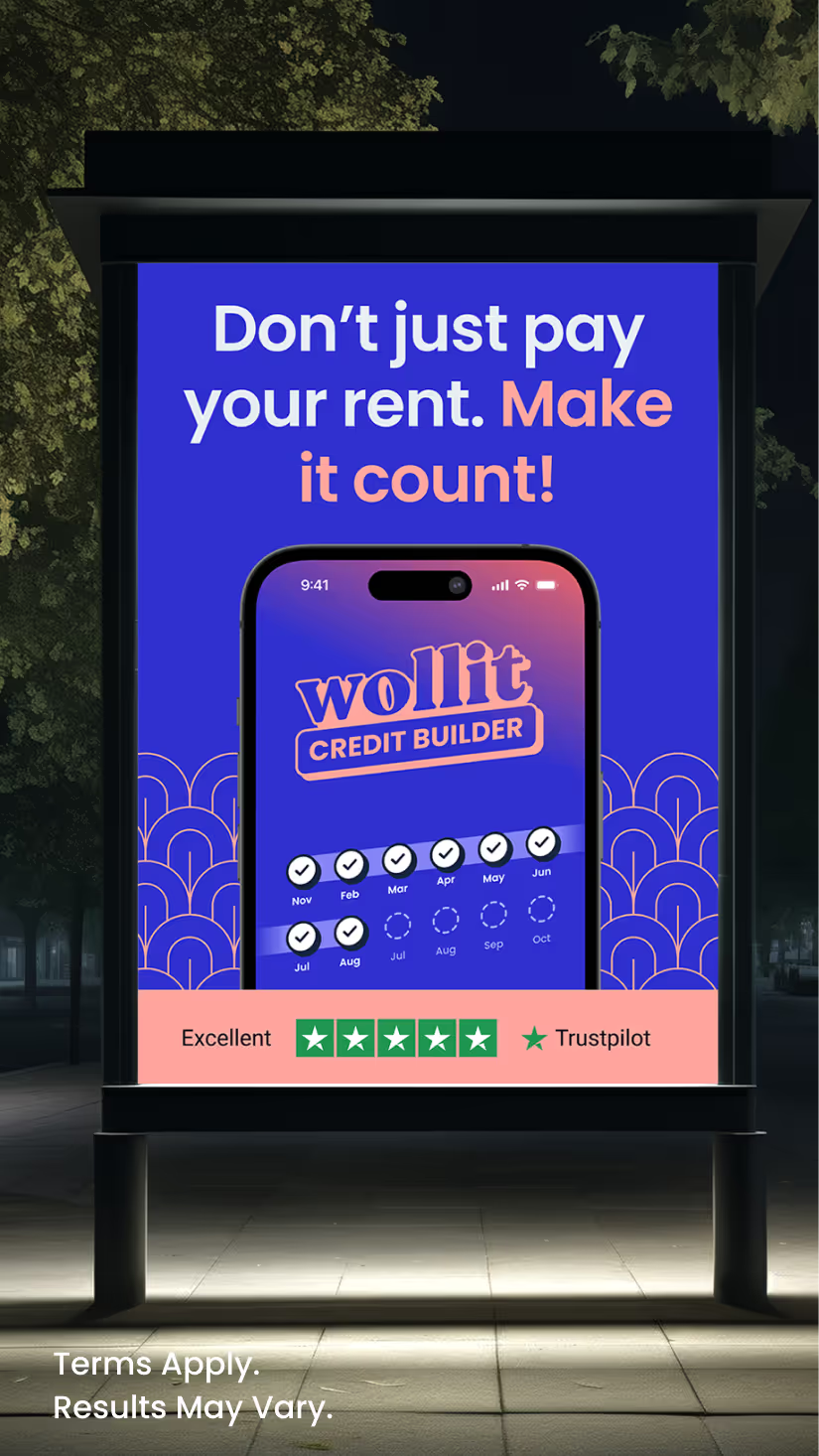
Hook type: Pattern-break visual / social proof
- Industry: App
- Ad type: Problem-solution / social proof ad
- Visual: The creative approach of mimicking a bus stop billboard grabs attention. The smartphone image showcases the Wollit app, putting the core product front and center. The clean layout and use of simple, impactful text create a visually striking and memorable advertisement.
- CTA: Learn more
- What’s good about this ad: “Don’t just pay your rent. Make it count!” highlights a relatable scenario and is both catchy and actionable. The simple, conversational copy and clear call-to-action encourage the audience to try Wollit's credit-building solution. The Trustpilot rating at the bottom adds social proof, further reinforcing the credibility.
7. Orbitkey

Hook type: Feature breakdown / visual explainer
- Industry: E-commerce
- Ad type: Feature callout ad
- Visual: A high-quality, closeup product image at the center, highlighting the details of the product. Key features are labeled with minimal text, making it easy to understand the product's value at a glance.
- CTA: Shop now
- What’s good about this ad: It communicates the value proposition of the Orbitkey product in a simple, straightforward manner. The key features are clearly highlighted, and the badges of industry awards add a strong sense of credibility and quality.
8. Linktree
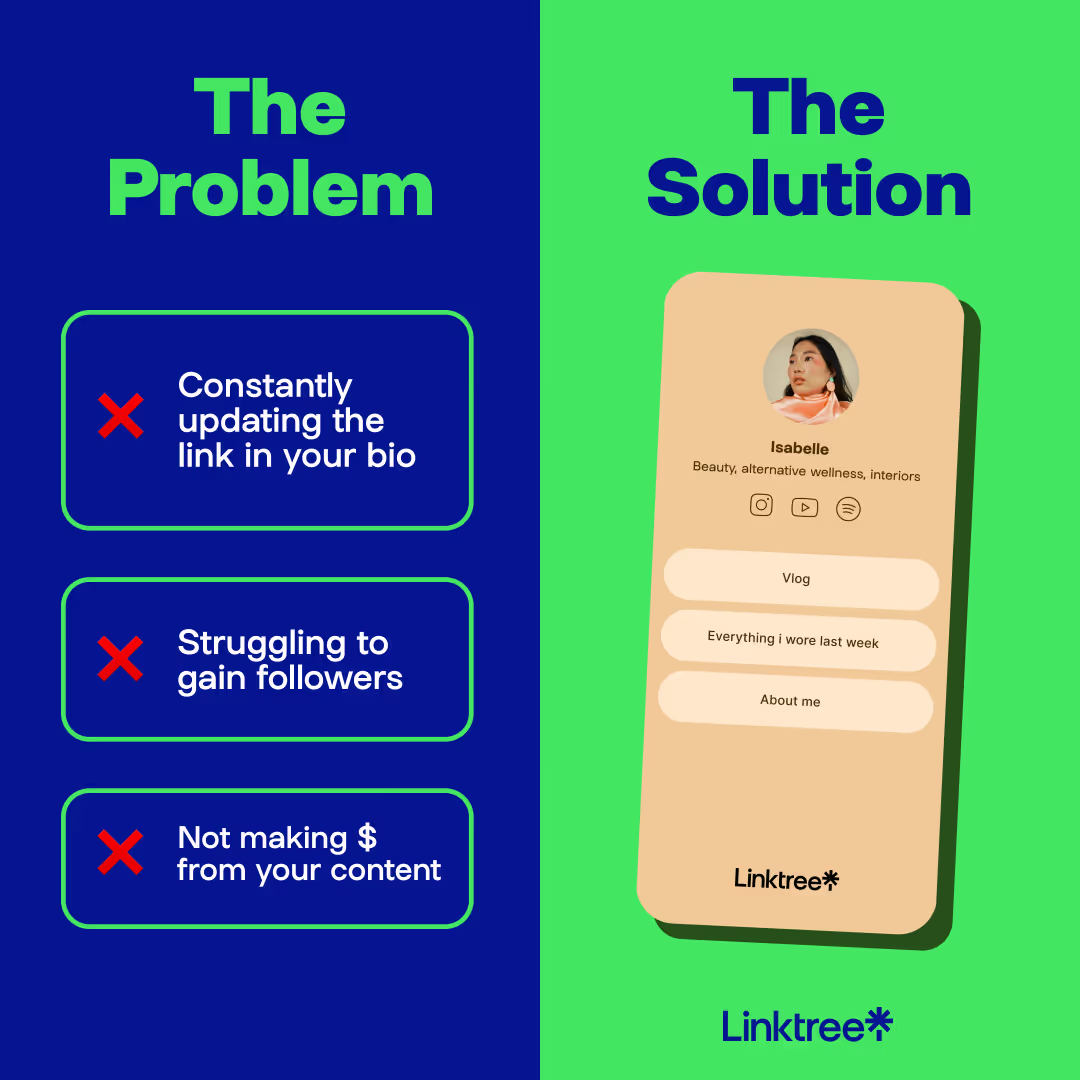
Hook type: Problem-solution comparison
- Industry: SaaS
- Ad type: Problem-solution ad
- Visual: The ad uses a clear side-by-side structure with contrasting colors. The layout draws attention to the solution being offered. Icons and checkmarks visually reinforce the pain points, while the mockup of a Linktree profile on the right demonstrates the product’s simple interface.
- CTA: Shop now
- What’s good about this ad: The straightforward comparison format helps potential users quickly connect the product to their needs. The bold text and visual hierarchy make the message easy to understand.
9. Uber Eats
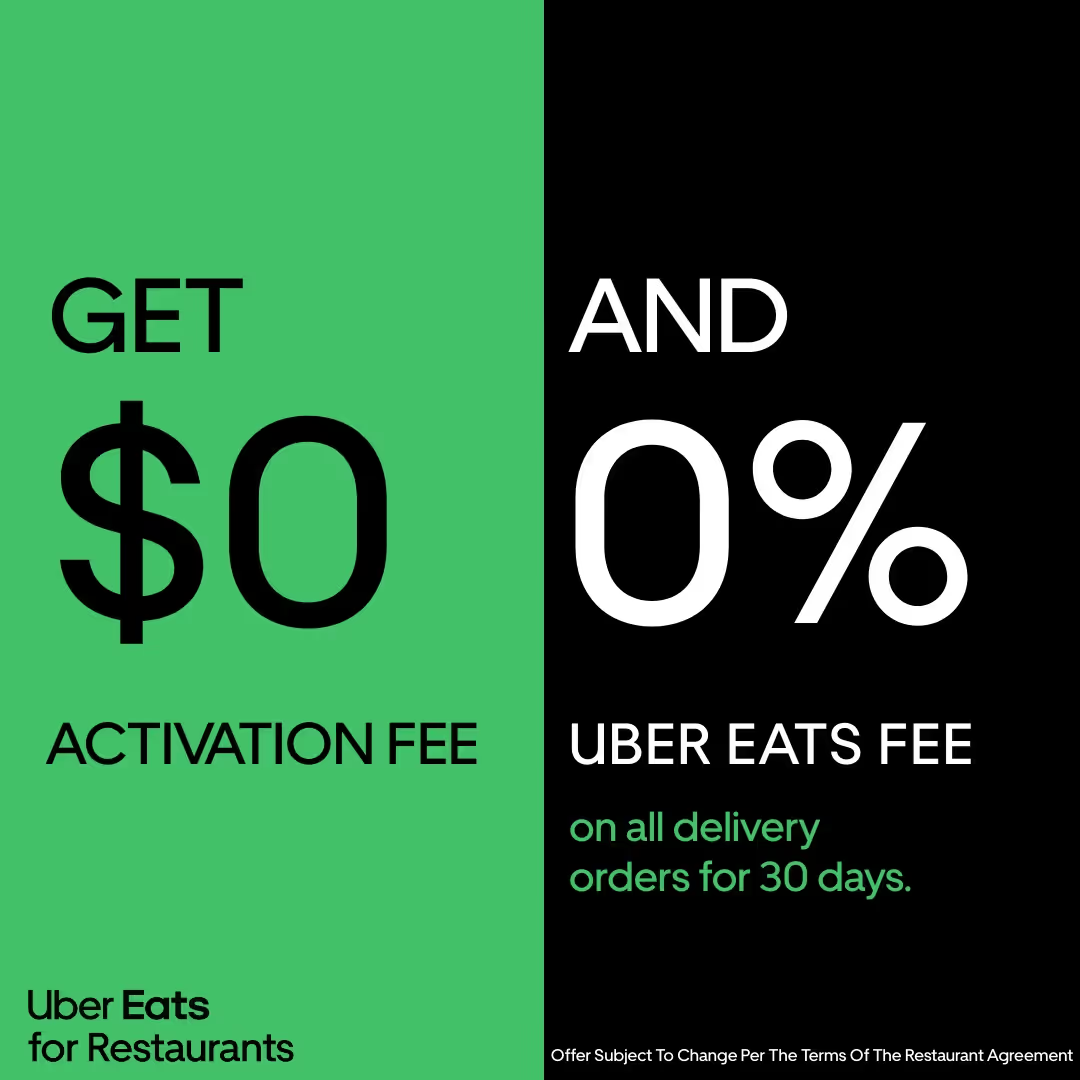
Hook type: Pricing offer + urgency
- Industry: Delivery platform
- Ad type: Announcement ad
- Visual: This text-only ad uses color contrast and a simple layout to grab attention. The large "$0" and "0%" text serve as focal points, making the offer easy to understand.
- CTA: Sign up
- What’s good about this ad: This ad is a great example of "less is more." It highlights an offer in a simple, direct way. The use of large fonts and high-contrast colors emphasizes the key benefits. It encourages quick decision-making and sign-ups.
10. Nudient
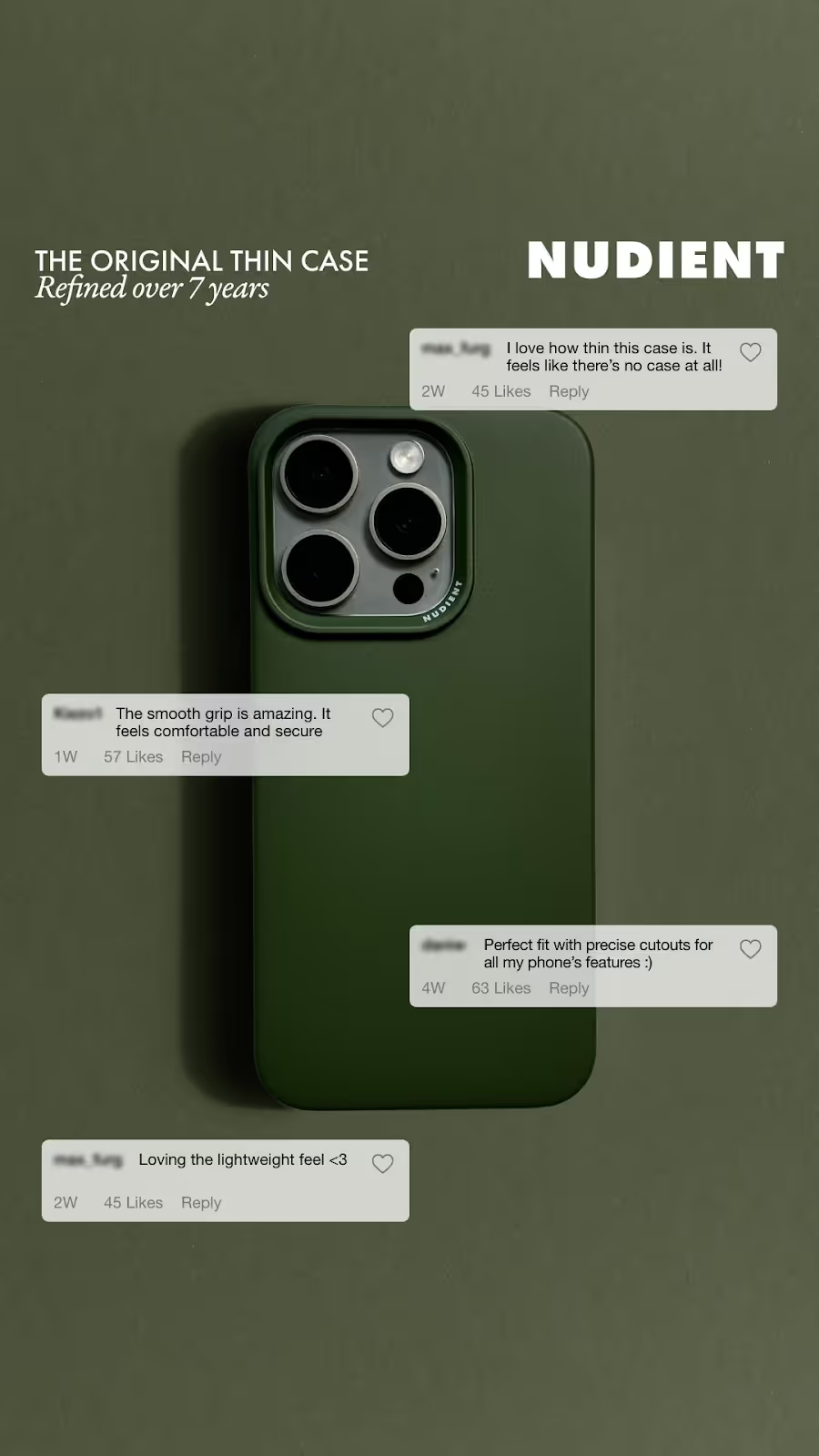
Hook type: Social proof + feature highlights
- Industry: E-commerce
- Ad type: Testimonial ad
- Visual: The monochromatic green background complements the product's minimalist aesthetic. User testimonials are presented naturally without cluttering the layout, enhancing trust and relatability.
- CTA: Shop now
- What’s good about this ad: A great use of testimonials highlights various key benefits, such as lightweight design, smooth grip, and a perfect fit for phones. The simple layout and colors attract an audience that prefers a minimalist aesthetic.
👋🏼 Did you know that many marketers prefer combining Facebook ads with Instagram ads to optimize their campaign performance? If you want the same for yourself, make sure to check out this collection of Instagram ad examples.
{{ad-library}}
Facebook ad types
Facebook offers diverse options for ad types, including single images, carousels, videos, and stories. Each format has different functions and best practices. Today we will look at image and story ad examples, as they are a good starting point to test out what marketing approach and strategy works better for your business or products.
Beyond these basics, Meta also offers Lead ads for capturing contact information, Collection ads for showcasing product catalogs, Instant Experience (Canvas) ads for immersive mobile experiences, Click-to-Messenger ads for conversational marketing, and Slideshow ads as a lightweight video alternative. Understanding which format fits your objective is the first step to creating effective Facebook ad examples.
What makes an effective Facebook ad?
The most effective Facebook ads combine several elements that work together to capture attention, build interest, and drive action. Based on analyzing hundreds of Facebook ad examples, here's what separates high performers from the rest:
1. A scroll-stopping hook
You have roughly 3 seconds to grab attention. The best ads lead with one of these proven hook types:
- Question hooks — "Tired of messy keys?" sparks curiosity
- Stat-led hooks — "93% of users saw results in 2 weeks" builds credibility
- Pattern-break visuals — Unexpected imagery that disrupts normal scrolling
- Urgency hooks — "Only 48 hours left" or "Almost sold out" create FOMO
2. Clear value proposition
The viewer should understand what's in it for them within seconds. Whether it's saving time (Stripe), looking good (The Ordinary), or helping the planet (Blueland), the benefit must be immediately obvious.
3. Visual hierarchy that guides the eye
Great Facebook ad creatives lead the viewer from headline → key visual → CTA in a natural flow. Cluttered designs with competing elements lose attention fast.
4. Authentic, relatable creative
In 2026, UGC-style ads (user-generated content) often outperform polished studio productions. Raw, authentic content feels more trustworthy and less "salesy" to audiences fatigued by traditional advertising.
5. Platform-native design
The best examples of Facebook ads feel native to the feed. They match the visual language users expect on Meta platforms—clean, mobile-first, and designed for thumb-stopping moments.
Do's and don'ts for Facebook ads
Do's:
- Keep it simple: Create ads with clear, focused visuals that communicate one primary message. Avoid cluttering the design with too many elements or competing ideas.
- Implement visual hierarchy: Design your ad with a clear visual flow. Guide the viewer's eye from the most important element (typically your key message or product image) to the call-to-action.
- Use the right CTA: There is a range of CTA buttons available for Facebook ads. Choose one that aligns with the main message of your ad and what you want people to do. Test different variations of the ad content along with CTA buttons to find out what works best for you.
- Optimize for specifications: Make sure your ad meets Facebook's recommended image sizes (1080x1080 pixels for square, 1080x1920 for vertical) for the best display quality.
- Design for sound-off viewing: Over 85% of Facebook videos are watched without sound. Add captions to your video ads; studies show captions increase view time by 12%.
- Lead with a strong hook: The first 3 seconds determine whether users keep watching or scroll past. Use a question hook, stat-led opener, or pattern-break visual to stop the scroll.
Don'ts:
- Don't overload images with text: Just like Instagram, people scan instead of reading through. Avoid excessive text in ad images, as users favor visuals with minimal text. Ads with too much text may experience lower reach and engagement.
- Don't neglect brand consistency: Maintain consistent brand elements like color schemes, fonts, and even tone of copy. Make your ads recognizable as part of your brand's visual identity.
- Don't use low-resolution images: Does it really matter if the images will mostly be seen on a small smartphone screen? Absolutely! Always use high-resolution images that look crisp on all devices. Pixelated or poor-quality visuals can make your brand appear unprofessional.
- Don't ignore creative fatigue: Even high-performing ads lose effectiveness over time. Monitor your frequency metrics and refresh creatives regularly to maintain performance.
- Don't set and forget: The best Facebook advertisers follow the MITO framework: Monitor, Iterate, Test, Optimize. Continuous optimization beats one-time setup every time.
Facebook ad formats explained
Choosing the right format is crucial for your campaign objectives. Here's a breakdown of every Facebook ad format available:
Image ads
This is the simplest format with a single compelling image with copy. Best for brand awareness and straightforward product promotion. Recommended size: 1080x1080 (square) or 1080x1350 (4:5 for mobile feed).
Video ads
Ideal for storytelling, demonstrations, and emotional connection. Short-form video (under 15 seconds) performs best for cold audiences. Design for sound-off with captions. Use 9:16 aspect ratio for Reels and Stories, 4:5 for feed.
Carousel ads
Showcase multiple products or tell a sequential story across 2-10 cards. Great for e-commerce product sequencing and unboxing-style storytelling. Each card can have its own link.
Collection ads
Combine video/image with a product catalog below. When tapped, it opens a full-screen Instant Experience. Perfect for e-commerce brands with multiple SKUs.
Instant Experience (Canvas) ads
Fullscreen, immersive mobile experiences that load instantly. Combine videos, images, carousels, and product feeds in one interactive unit.
Lead ads
Capture contact information without users leaving Facebook. Pre-filled forms reduce friction. Ideal for B2B, real estate, education, and service businesses.
Click-to-Messenger ads
Drive conversations instead of website clicks. Opens a Messenger chat when clicked. Excellent for high-consideration products, customer service, and conversational commerce.
Slideshow ads
Lightweight video-like ads created from static images. Useful when you don't have video assets or need ads that load quickly on slower connections.
Key metrics to track for Facebook ads
Understanding your numbers separates amateur advertisers from professionals. Here are the Facebook ad metrics that matter most:
AI tools for creating Facebook ads
The "traditional way" of creating Facebook ads, i.e., scripting, filming, and editing, can take days or weeks. In 2026, AI-powered ad tools compress this to minutes. Here are the leading platforms:
The AI approach to Facebook ads
Instead of creating one "hero" video, modern advertisers use AI to generate modular content, which means they get to create hundreds of variations, testing different hooks, music, and CTAs. This creative velocity approach finds winners faster and combats creative fatigue.
How to spy on competitor Facebook ads
Want to see exactly what Facebook ads your competitors are running right now? Meta makes this easy through their transparency tools.
Using the Facebook Ad Library
- Go to facebook.com/ads/library
- Select your country and ad category
- Search for any brand, competitor, or keyword
- View all active ads, including creative, copy, and launch date
What to look for:
- Creative patterns — What visual styles are they testing?
- Hook types — How do they open their ads?
- Offer structures — What promotions or CTAs are they using?
- Ad longevity — Ads running for months are likely profitable (they wouldn't keep spending otherwise)
- Volume — Brands running many variations are likely testing aggressively
Using the "Info and Ads" section
Visit any Facebook Page, click "Page Transparency," then "See All" under "Ads From This Page." This shows all active ads from that specific page.
Benchmarking your performance
Use tools like Facebook Ads Benchmarks reports (published by WordStream, Databox, and others) to compare your CPC, CPM, and CTR against industry averages. This tells you whether your performance issues are creative problems or market realities.
Retargeting strategies that convert
Cold traffic gets the attention, but retargeting drives conversions. Here are the most effective Facebook retargeting approaches:
Cart abandonment recovery
Show ads specifically to users who added products to their cart but didn't purchase. Include the exact products they viewed, often with a small incentive (free shipping, 10% off) to close the sale.
Dynamic product retargeting
Automatically show users the specific products they browsed on your site. Meta's dynamic ads pull from your product catalog to personalize creative at scale.
Trial-to-paid conversion
For SaaS and subscription products, retarget free trial users with ads highlighting premium features, success stories, or limited-time upgrade offers.
Content engagement retargeting
Retarget users who watched 50%+ of your videos or engaged with previous ads. They've shown interest, now move them down the funnel with stronger CTAs.
Personalized style/preference ads
Based on browse behavior, show ads featuring products matching their demonstrated preferences (color, category, price range). Feels personalized rather than generic.
The key to retargeting is that you need to segment your audiences by intent level. Someone who spent 5 minutes on your pricing page is much warmer than someone who bounced after 10 seconds. Your messaging should match their awareness stage.
Final thoughts
The best Facebook ad examples share common DNA: they hook attention instantly, communicate value clearly, and make the next step obvious. Whether you're inspired by monday.com's clean SaaS approach, Blueland's trust-badge strategy, or Wollit's pattern-break creative, the principles remain consistent.
Remember that creative-first targeting now drives performance more than audience hacks. Invest in understanding hook types, embrace AI tools for creative velocity, and never stop testing. The brands winning on Meta platforms in 2026 are those treating creative as their primary optimization lever.
Use the Facebook Ad Library to study competitors, track your metrics religiously, and don't be afraid to let authentic, UGC-style content outperform your polished productions. Sometimes the "ugly" ad wins.
{{redirect}}
Frequently asked questions
What is the most effective Facebook ad?
The most effective Facebook ads combine a scroll-stopping hook, clear value proposition, and strong call-to-action. In 2025/2026, UGC-style video ads often outperform polished productions because they feel more authentic and native to the feed. However, "most effective" depends on your objective. Lead ads excel for B2B lead generation, Collection ads work best for e-commerce catalogs, and Click-to-Messenger ads drive conversational commerce. Test multiple formats and let your metrics guide you.
Is $10 a day enough for Facebook ads?
$10/day can work for testing and learning, but it limits your data and reach. At $10/day, you'll spend roughly $300/month, which is enough to test 2-3 ad variations and gather initial performance data. For meaningful results, most advertisers need $30-50/day minimum to exit the learning phase quickly and generate statistically significant data. Start with $10/day to validate your offer and creative direction, then scale what works.
What should a Facebook ad include?
Every effective Facebook ad example includes these core elements: a compelling visual or video that stops the scroll, a clear headline communicating the main benefit, body copy that expands on the value proposition, social proof when possible (reviews, testimonials, trust badges), and a strong CTA button aligned with your objective. For video ads, add captions for sound-off viewing and front-load your hook in the first 3 seconds.
How to write a good Facebook ad?
Start with your hook aka the first line users see. Use question hooks ("Struggling with X?"), stat hooks ("93% of customers saw results"), or curiosity hooks ("The secret top brands don't share"). Keep copy concise and benefit-focused. Use "you" and "your" for personalization. Include one clear CTA, don't confuse users with multiple asks. Test multiple copy variations; often the version you'd least expect wins.
What are the best hook types for Facebook ads?
The most effective hooks for Facebook ad examples include: Question hooks that call out a pain point, Stat-led hooks that lead with a compelling number, Pattern-break hooks using unexpected visuals that disrupt scrolling, Social proof hooks featuring testimonials or review counts, Urgency hooks creating FOMO with limited-time offers, and Curiosity hooks that tease information without revealing everything. Test different hook types because what works varies by audience and offer.
How do I know if my Facebook ad is working?
Track these key metrics: Hook rate (>25% target) tells you if your opening grabs attention. CTR (>1% is solid) shows if people want to learn more. CPC and CPM indicate efficiency. Conversion rate and CPA measure actual business results. Most importantly, track ROAS. If you're generating more revenue than you spend, the ad is working. Give ads at least 3-5 days and $50-100 spend before judging performance.