Did you know that 75% of B2B buyers consult social media before making a purchase decision, and over 80% of C-level executives do the same?
B2B social media marketing is the practice of using social platforms to build trust, generate leads, and influence buying decisions among business audiences, and it has become one of the most important channels for reaching buyers during the research phase that makes up most of the 272-day average B2B sales cycle.
But here is the problem most B2B teams run into: every guide tells you to "just be consistent" without explaining what that actually looks like for a company with a small marketing team, a CEO asking about social ROI, and competitors who seem to post constantly. This guide is built to fix that, with practical strategy for both organic content and paid advertising.
At MagicLibrary, we have studied thousands of high-performing B2B ads across LinkedIn, Meta, and Google to understand what actually works in paid and organic social.
Here is what this guide covers:
- What is B2B social media marketing
- Different ways of B2B social media marketing
- How to choose the right platform for your B2B audience
- How to build a paid social advertising strategy from scratch
- What B2B ad formats work on each platform and what they cost
- How to measure results beyond vanity metrics like likes and impressions
- A 90-day launch plan covering both organic and paid milestones
- How social media employee advocacy can multiply your reach by 10x
What is B2B social media marketing?
B2B social media marketing is the use of social platforms to build professional relationships, establish thought leadership, and nurture prospects through long, multi-stakeholder buying cycles. The goal is not instant conversion. The goal is to become the company your buyer already trusts by the time they are ready to talk to sales.
That is a fundamentally different job than what B2C social media does. When a clothing brand runs a TikTok ad, they want someone to buy a jacket today. When a B2B SaaS company posts on LinkedIn, they want a VP of Marketing to recognize their name six months from now when budget opens up for a new tool.
Why B2B social media works differently than B2C
The differences go deeper than just "longer sales cycles." B2B buying involves committees of 6 to 10 people who all need to agree before a purchase moves forward. That means your social content needs to resonate with multiple roles, from the end user who will operate the product to the CFO who signs off on the budget.
Here is a side-by-side comparison that makes the differences clear:
Understanding these differences matters because it changes everything about your strategy. The content formats you choose, the platforms you prioritize, the way you write ad copy, and the metrics you track all shift when you are marketing to businesses rather than consumers.
Types of B2B social media marketing
B2B social media marketing is not one activity. It is three distinct approaches that work together, and the most effective B2B companies use all three in combination. Understanding the differences helps you decide where to invest your time and budget first.
Organic social media marketing
Organic social media is everything you post without paying to promote it. This includes LinkedIn text posts, YouTube videos, Instagram carousels, and any content your company or team publishes natively on a platform.
Why it matters for B2B:
- It builds long-term trust and brand recognition with your target audience over time
- It gives you a public record of your expertise, opinions, and proof that prospects can review during their research phase
- It costs time rather than money, which makes it the best starting point for B2B teams with limited ad budgets
- It provides data on which messages, formats, and topics resonate with your audience before you put paid budget behind them
The main limitation of organic social is reach. Platform algorithms control how many people see your posts, and organic reach has been declining across most platforms year over year. That is why organic works best when it is paired with paid social and employee advocacy rather than treated as the only approach.
Paid social media advertising
Paid social is any content you pay to promote to a specific audience, including sponsored posts, display ads, video ads, lead generation forms, and message ads. It gives you control over exactly who sees your content, which is something organic social cannot guarantee.
Why it matters for B2B:
- It lets you reach decision-makers at specific companies, industries, and job titles, even if they have never heard of you
- It accelerates results because you do not need to wait months for organic reach to build
- It supports every stage of the funnel, from brand awareness campaigns to retargeting ads that bring warm prospects back to your website
- It provides clear, measurable data on cost per lead, cost per click, and return on ad spend
The main limitation of paid social is that it requires budget, and B2B ad costs can be high, especially on LinkedIn. It also requires strong ad creative, because even the best targeting will not save an ad that does not stop the scroll. We cover paid strategy, ad formats, budgets, and creative best practices in detail later in this guide.
{{ad-library}}
Employee advocacy and personal branding
Employee advocacy is when your team members, especially founders, executives, and subject-matter experts, share content and build their personal brands on social media in a way that supports the company's visibility and credibility.
Why it matters for B2B:
- Employees have 10x more social media followers than their company's corporate page, which means their posts reach a much larger audience
- Content shared by employees generates 200% higher click-through rates and 700% more engagement than the same content posted from a company account
- B2B buyers trust people more than logos, so a thoughtful post from your Head of Product will almost always feel more credible than a polished company page update
- It costs nothing beyond the time your team invests, and it compounds over time as individual profiles build authority
The main limitation of employee advocacy is that it depends on willing participants. You cannot force people to post, and scripted copy-paste content looks artificial and performs poorly. We cover how to set up an advocacy program that works later in this guide.
How the three types work together
The strongest B2B social media strategies use all three types in a coordinated system. Organic content establishes your point of view and tests messages. Paid social puts your best-performing content in front of the right decision-makers at scale. And employee advocacy adds a human trust layer that neither organic nor paid can create on their own.
If you are just starting out, begin with organic and employee advocacy (both are free) and add paid social once you have a clear ICP, a working landing page, and at least 30 days of organic data to inform your ad creative.
Why B2B companies need social media marketing in 2026
If you have ever wondered whether social media actually moves the needle for B2B, the data answers that question clearly.
LinkedIn dominates B2B social traffic
LinkedIn alone accounts for over half of all social traffic to B2B websites and drives 97% of B2B social leads. That is not a nice-to-have channel. That is where your pipeline starts for most B2B companies, and LinkedIn is just one platform in the mix.
Buyers research before they ever talk to sales
B2B buyers are 60 to 70% through their decision process before they ever speak to a salesperson. They are reading your LinkedIn posts, watching your YouTube videos, scanning your case studies, and comparing you against competitors on their own time. If you are not visible during that research phase, you are not in the consideration set when it matters.
Social media is your pre-sales trust layer
Your prospects are not just looking at your product pages. They are checking whether your founders have interesting opinions, whether your customers talk about you publicly, and whether your team seems like people they would actually want to work with.
Your real reach is bigger than your analytics show
A significant portion of B2B social influence happens in what marketers call dark social, which includes Slack channels, private email threads, WhatsApp groups, and DM conversations where links get shared but no UTM tracking exists. That means your social content almost certainly reaches more people and influences more decisions than your attribution reports suggest.
How to choose the right platform for B2B social media
So which platform should you start with? The answer depends on where your specific buyers spend their professional time, but for most B2B companies, there is a clear starting point.
LinkedIn (the primary B2B platform)
LinkedIn should be the first platform most B2B companies invest in, because it is built around professional identities, business networks, and expertise sharing. It is where decision-makers go to learn, and it is where they expect to encounter B2B brands.
Key features for B2B:
- Native text posts, document carousels, vertical video, and long-form articles all perform well organically
- The algorithm currently favors conversational posts between 1,300 and 3,000 characters, which perform roughly 38% better than shorter or longer posts
- Posts with relevant outbound links can see up to 236% better performance when the link adds genuine value to the reader
- LinkedIn Campaign Manager gives you access to the most precise B2B targeting available, including job title, company name, industry, and seniority level
- Lead Gen Forms let you capture leads directly inside the platform without sending users to an external landing page
Best for:
- Thought leadership and founder-led content
- Lead generation and ABM (account-based marketing)
- Hiring and employer branding
- Building credibility with specific industries or roles
- Distributing case studies, client results, and social proof
YouTube (the long-form authority builder)
If your product requires explanation, YouTube is the platform that builds authority at scale. Currently, 78% of B2B marketers use video, and combining video with authentic, personality-led content boosts engagement by 2.5x compared to static content alone.
Key features for B2B:
- Long-form video lets you demonstrate product value, process, and expertise in ways that text and images cannot
- YouTube Shorts gives B2B brands a short-form video format that works well for quick tips, highlights, and repurposed clips
- Videos rank in Google search results, so every video you publish doubles as an SEO asset for B2B queries
- Playlists let you organize content by topic, product, or buyer stage, making it easy for prospects to self-educate
Best for:
- Product demos and tutorials
- Webinar recordings and educational series
- Customer success stories and testimonials
- In-depth explainers for complex products or services
Meta platforms (Facebook and Instagram for B2B)
Many B2B marketers overlook Facebook and Instagram, but Meta's advertising platform is one of the most powerful tools for B2B remarketing and broad awareness campaigns. Meta Ads Manager, which is the central dashboard where you create and manage ads across Facebook and Instagram, offers the most advanced targeting and creative testing tools of any platform.
Key features for B2B:
- Custom audiences let you retarget website visitors, email list contacts, and video viewers with high precision
- Lookalike audiences help you find new prospects who resemble your best existing customers
- Lower CPCs than LinkedIn (typically $1 to $5 for B2B) make Meta a strong platform for testing ad creative and messaging before scaling
- Advantage+ campaigns use AI-powered optimization to automatically test targeting, placements, and creative combinations
- Carousel and video ad formats work well for showcasing multiple product features or customer use cases
Best for:
- Remarketing to website visitors and warm audiences
- Building brand familiarity beyond work contexts
- Testing ad creative variations at lower cost
- Running visual awareness campaigns across Facebook and Instagram
X, TikTok, and emerging platforms
These platforms play supporting roles for most B2B companies, but each serves a specific purpose depending on your audience and industry.
X (formerly Twitter)
- Real-time conversation makes it useful for industry events, product launches, and trending topics
- Quick-take text format works well for sharing opinions and engaging with industry peers
- Promoted Tweets and Follower Ads offer basic paid options for B2B awareness
Best for: B2B companies in tech, media, and sectors where public industry conversation drives awareness.
TikTok
- Over 1.7 billion global users, and 75% of users say they discover new brands on the app
- Creator-led content and short educational videos are proving effective for B2B companies willing to invest early
- Spark Ads let you boost organic creator content as paid ads, which keeps the authentic feel
Best for: Brand awareness, reaching younger decision-makers, and companies with a visual or personality-led brand.
Reddit, Slack, and Discord
- Reddit offers peer-to-peer validation in niche B2B communities like r/b2bmarketing, r/SaaS, and industry-specific subreddits
- Slack and Discord communities serve developer-focused and technical B2B audiences where trust is built through participation, not promotion
Best for: Community engagement, gathering product feedback, and reaching technical or developer audiences.
Platform comparison table
Note: CPC ranges are approximate 2025 to 2026 benchmarks and vary by industry, targeting, and creative quality.
The most important rule here is to not spread yourself thin. Start with one primary platform and one supporting platform. Get good at those two before adding a third.
How to build your B2B social media content strategy
Now that you know where to show up, the next question is what to actually post. Most B2B teams struggle here because they either default to product announcements nobody engages with, or they try to replicate what B2C influencers do and it feels forced.
The fix is to build a content strategy around content pillars, which are recurring categories of topics that your audience cares about and your company has genuine expertise in.
Define your content pillars (the 4-pillar framework)
A practical framework for most B2B companies uses four pillars:
- Teach: Share insights, frameworks, how-to guides, checklists, and common mistakes to avoid. This content demonstrates your expertise and gives prospects a reason to follow you.
- Show proof: Post case studies, before-and-after results, client testimonials, product walkthroughs, and real performance data. This content reduces the perceived risk of working with you, because B2B buyers are risk-averse and seeing that a similar company already uses your product makes them more comfortable.
- Share perspective: Publish founder opinions, industry observations, strong points of view, and lessons learned from real experience. This is what separates your brand from every other company sharing the same generic advice.
- Humanize: Show behind-the-scenes work, team process, company culture, and how you build your product. Buyers trust people more than logos, and this content makes your company feel like a team of real humans rather than a faceless brand.
A solid split is roughly 80% useful or trust-building content and 20% direct promotion. That ratio keeps your audience engaged without making every post feel like a sales pitch.
Content formats that work for B2B
Not all formats perform equally on every platform. Here are the ones that consistently work well for B2B audiences:
- Document carousels on LinkedIn (high save rate, good for step-by-step breakdowns)
- Short-form video on LinkedIn, YouTube Shorts, and TikTok (personal, authentic, educational)
- Text posts with strong opening hooks on LinkedIn (the algorithm rewards posts that generate conversation)
- Case study breakdowns with specific numbers and outcomes
- Data visualizations and charts that summarize industry trends or original research
- Employee-generated content where team members share their own professional insights
{{redirect}}
How often to post (realistic cadence for small teams)
If you are working with a small team, here is a posting cadence that is ambitious enough to build momentum but realistic enough to sustain:
- LinkedIn: 2 to 3 posts per week
- Supporting platform: 1 to 2 posts per week
- One substantial proof post per month (a detailed case study, customer testimonial, or results breakdown)
- 15 to 20 minutes of daily engagement with relevant prospects, customers, and industry peers
Consistency matters more than volume. Posting twice a week for six months will produce better results than posting daily for three weeks and then going silent for two months.
The content repurposing system
If creating enough content feels overwhelming, the solution is to build a repurposing system rather than creating everything from scratch. Start with one long-form asset, such as a blog post, webinar recording, or podcast episode, and break it into multiple social formats.
Here is what that looks like in practice:
- Record a 30-minute webinar on a topic your audience cares about
- Pull 5 to 8 key insights from the recording
- Turn each insight into a standalone LinkedIn text post
- Create 2 to 3 short video clips (60 to 90 seconds each) from the best moments
- Design a carousel summarizing the main framework or steps
- Write a blog post expanding on the full topic (which drives SEO traffic)
- Send the blog post to your email list with a summary
That is 10 to 15 pieces of content from a single recording session. This approach is how small B2B teams stay visible without burning out their content creators.
How to run B2B paid social media ads
So what about paid social? Most B2B social media guides treat advertising as an afterthought. You will usually find a single paragraph that says "boost your best posts" or "consider LinkedIn Ads." But if you are investing money into paid social, you need a real framework, not a footnote.
Paid social matters for B2B because organic reach on most platforms is declining year over year. Even on LinkedIn, where organic reach is still relatively strong compared to Meta, only a small percentage of your followers will see any given post. Paid ads let you reach specific decision-makers at target companies, even if they have never heard of you before.
When to start running B2B social ads (and when to wait)
You do not need to run paid ads from day one. But you probably need them sooner than most B2B teams realize.
Start paid social when you have these three things in place:
- A clear Ideal Customer Profile (ICP): You know the job titles, industries, company sizes, and pain points of the people you want to reach
- A working landing page or offer: You have somewhere to send paid traffic that can capture a lead or start a conversation
- At least 30 days of organic content: This gives you data on which messages resonate, so your ad creative can build on proven topics rather than guessing
If you are missing any of those three, fix them first. Running ads without a clear ICP or a working landing page is a fast way to waste budget.
B2B ad formats by platform
Each platform offers different ad formats, and choosing the right one depends on your goal. Here is a breakdown of the most useful formats for B2B:
LinkedIn ad formats
Meta (Facebook/Instagram) ad formats
YouTube ad formats
How to target the right B2B audience with paid ads
The power of B2B paid social is in the targeting. Here are the targeting approaches that work best for B2B:
LinkedIn targeting options:
- Job title (e.g., VP of Marketing, Head of Growth)
- Company name (for ABM campaigns targeting specific accounts)
- Industry and company size
- Seniority level (entry, manager, director, VP, C-suite)
- Skills and group memberships
Meta targeting options:
- Custom audiences from website visitors (using the Meta Pixel)
- Email list uploads for direct targeting of known contacts
- Lookalike audiences based on your best customers
- Interest and behavior layering for prospecting
ABM-style targeting:
Both LinkedIn and Meta allow you to upload account lists for targeted campaigns. LinkedIn Campaign Manager lets you upload company names directly, while Meta lets you upload email lists to create custom audiences. For more advanced ABM, tools like 6Sense can provide intent data that tells you which target accounts are actively researching solutions like yours, so you can focus your ad budget on the accounts most likely to buy.
Retargeting strategies:
- Website visitors who viewed your pricing page (high intent)
- People who watched 50% or more of a video ad (engaged but not converted)
- Lead form openers who did not submit (abandoned form recovery)
- People who downloaded a lead magnet (nurture to the next stage)
What makes a B2B ad creative that actually converts
This is where most B2B ads fail. The targeting is right, the budget is reasonable, and the landing page is solid, but the ad itself looks like a stock photo with a generic headline that says "Transform Your Business." We have all seen that B2B ad that looks like it was designed in PowerPoint by someone who just discovered gradients. You know the one.
So what makes a B2B ad actually work? It comes down to a few principles:
Lead with the outcome, not the feature
Instead of "Our platform has AI-powered analytics," try "Know which deals will close this quarter before your team does." The buyer cares about what your product does for them, not what it is made of.
Use social proof visibly
B2B buyers are risk-averse. Seeing that companies similar to theirs already use your product reduces the perceived risk of trying it. Include customer logos, a specific metric ("Helped 500+ SaaS companies reduce churn by 23%"), or a short testimonial quote directly in the ad creative.
Keep copy concise for mobile
Your headline should be under 10 words, and your primary text should be under 125 characters. Most people see your ad on a phone screen while scrolling quickly, so every word needs to earn its place.
Use high-contrast visuals
Dark text on light backgrounds, bold typography, and clean layouts stop the scroll better than busy, over-designed graphics. Simple often wins.
Test different creative angles from the same core message
Run at least three variations of each ad: one focused on a pain point, one focused on an outcome or aspiration, and one focused on social proof. Let the data tell you which angle resonates most with your audience.
Here is a quick checklist you can use before launching any B2B ad:
- Does the headline state a clear outcome or solve a clear pain?
- Is there social proof visible in the creative (logos, stats, or a testimonial)?
- Is the CTA specific and relevant (not just "Learn More")?
- Does the visual work at mobile size without losing clarity?
- Is the primary text under 125 characters?
- Have you prepared at least 3 creative variations to test?
Here's what Max Fleitmann, the Co-founder of magier has to say on this: "When we design ads at magier, the first question is always 'What would make someone stop scrolling?' not 'What features should we list?' That shift in thinking is what separates ads that perform from ads that just exist."
If you do not have an in-house design team, working with a specialized B2B ad design service like magier can help you produce professional ad creatives without the overhead of a full-time hire. The investment in quality design pays for itself when your CTR improves and your cost per lead drops.
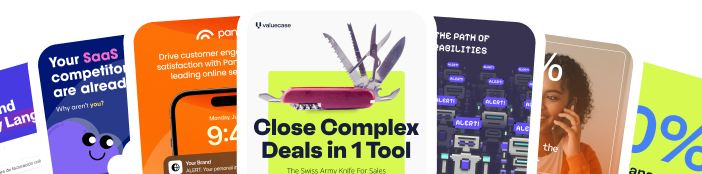
And if you need inspiration before you brief a designer or start building your own ads, feel free to browse MagicLibrary's ad library to see 1,000+ real B2B ads from companies like Webflow, Canva, and Zapier. You can filter by ad type (Lead Gen, Awareness, Social Proof, Comparison, Testimonial), industry (SaaS, Fintech, AI), and platform (Google, Meta, LinkedIn) to find examples that match your specific needs.
How much to spend on B2B social ads (budget framework)
Budget is the question every B2B marketer asks first, and the honest answer is that it depends on your platform, your targeting specificity, and how competitive your industry is. But here are practical starting points:
One approach that works well for resource-constrained teams is "organic first, then put budget behind winners." Post content organically for 2 to 4 weeks, identify the posts that generated the most engagement from your target audience, and then put paid budget behind those proven messages. This reduces creative risk because you already know the message resonates before you spend money on it.
How to fight creative fatigue in B2B ads
Creative fatigue happens when your ad performance starts declining because the same audience has seen the same creative too many times. The symptoms are a dropping CTR, a climbing frequency metric, and an increasing cost per lead.
Most B2B advertisers hit creative fatigue every 2 to 4 weeks, depending on audience size and budget. The smaller your audience, the faster fatigue sets in, because each person sees your ads more frequently.
The fix is to rotate your ad creatives regularly and test different angles from the same core message. If your current best-performing ad leads with a pain point, test a variation that leads with social proof. If your visual is a product screenshot, test a version with a customer photo or a bold typographic design instead.
Coming up with fresh creative angles every two weeks is a real challenge, especially for small marketing teams. This is exactly why tools like MagicLibrary exist, to give you a library of proven B2B ad examples you can reference whenever you need a new direction. Instead of staring at a blank canvas, you can browse what high-performing companies are doing right now and adapt those approaches for your own campaigns.
Employee advocacy and personal branding for B2B
Here is a fact that might surprise you: employees have 10x more social media followers than their company's corporate page. And content shared by employees generates 200% higher click-through rates and 700% more engagement than the same content posted from a company account.
That gap exists because people trust other people more than they trust brand logos. A LinkedIn post from your Head of Product sharing what they learned from a failed product launch will almost always outperform a polished company page update about the same topic. And this is especially true in B2B, where buyers want to know that real humans with real expertise are behind the product they are considering.
How to set up a basic employee advocacy program
You do not need a formal program with 50 employees to make advocacy work. Start small with these steps:
- Identify 3 to 5 willing advocates: Look for people who are already somewhat active on LinkedIn, whether they are founders, executives, product leaders, or customer-facing team members. Do not force anyone who is uncomfortable posting.
- Give them content prompts, not scripts: Share topics, themes, or angles they can write about in their own voice. "Here are three customer questions we get every week that would make good posts" is useful. Copy-paste text that 5 people all post identically is not useful, and it looks artificial.
- Make it easy with reusable assets: Provide images, data points, and key quotes they can build posts around. Reduce the effort required to go from "I should post" to "Done, posted."
- Share results and celebrate wins: When an employee's post generates a lead, a meaningful comment from a prospect, or a partnership conversation, share that back with the group. Seeing real business impact motivates continued participation.
- Track engagement monthly, not daily: Measure profile visits from target accounts, website clicks from employee posts, and any inbound conversations that mention specific posts or topics.
A simple division of labor works well: the company page handles polished content like case studies, product news, and job posts, while founders and experts handle opinions, lessons, practical advice, and personal observations. This way each channel plays a distinct role and they reinforce each other rather than duplicating effort.
How to measure B2B social media marketing results
If you are measuring your B2B social media success by counting likes and followers, you are tracking the wrong things. Those metrics tell you whether people saw your content, but they tell you nothing about whether the right people took meaningful action because of it.
Metrics that matter for B2B social
Here is a framework that maps the right metrics to each stage of the buyer journey, for both organic and paid:
The key shift is moving from "how much engagement did we get?" to "how much engagement did we get from people who could actually become customers?" A post with lower reach but three meaningful comments from decision-makers at target accounts is far more valuable than a viral post that generates thousands of likes from people who will never buy.
Dark social and why your numbers are always undercounting
Here is something that frustrates every B2B marketer who tries to prove social media ROI. A significant portion of your social media's influence happens in places where no tracking exists.
When a VP of Engineering shares your LinkedIn post in a private Slack channel with their team, there is no UTM parameter attached. When a CMO forwards your case study link in an email thread, your analytics dashboard does not record it. When a prospect mentions "I saw your post about X" in a sales call, that attribution does not show up in any report.
This invisible sharing is called dark social, and it means your social media's true impact on pipeline is almost always larger than what your analytics show. To get a more accurate picture, try these approaches:
- Add a "How did you hear about us?" field to your lead capture forms
- Ask directly in sales calls how prospects first became aware of your company
- Track branded search volume trends as a proxy for awareness growth (if more people search your company name over time, social is likely a contributor)
- Monitor direct traffic spikes that correlate with social content publishing
Attribution models for B2B social
Most B2B companies default to last-click attribution, which gives all the credit to whatever a prospect clicked right before they converted. The problem with last-click is that it drastically undervalues social media, because social usually plays a top-of-funnel role. Someone might see five of your LinkedIn posts over two months, then click a Google ad, and last-click gives all the credit to Google.
Multi-touch attribution distributes credit across all the touchpoints a prospect interacted with before converting. CRM platforms like HubSpot and analytics tools like Google Analytics can help you set up multi-touch tracking, and the insight is worth the setup effort, because it gives you a much more honest picture of how social media contributes to pipeline.
How to integrate social media into your B2B marketing plan
Social media works best when it is connected to the rest of your marketing operation, not when it runs as an isolated channel. Think of social as a distribution and trust-building layer that strengthens everything else you do.
Social strengthens your content marketing
Every blog post, guide, case study, and webinar you create is a piece of content that social media can distribute to a targeted audience. Without social distribution, most B2B content sits on a website waiting for organic search traffic that takes months to build.
Social proof feeds your sales conversations
Screenshots of positive LinkedIn comments, customer posts about your product, and engagement data from successful campaigns can all be used by your sales team in decks and outreach emails. Social proof collected from public social interactions is more credible than anything you write on your own website.
Social listening informs your positioning
Paying attention to what your target audience discusses, complains about, and asks for on social media gives your product marketing team real-time insight into pain points and language that should show up in your messaging.
ABM and social work together
If your company uses account-based marketing, social media is one of the most effective channels for engaging target accounts. You can run LinkedIn ads targeted at specific companies, engage with posts from decision-makers at those accounts, and use intent data to prioritize which accounts to focus on this quarter.
Your social ads are often the first visual impression a buyer has of your brand. If those ads look rushed or generic, it affects how prospects perceive everything else you do, from your website to your sales calls. Investing in quality ad design, whether in-house or through a service like magier, pays off across the entire marketing funnel because it sets the tone for every interaction that follows.
AI tools and automation for B2B social media in 2026
AI is changing how B2B teams create, manage, and optimize social media. You do not need to adopt every new tool, but understanding where AI can save time helps you do more with a small team. According to Davang Shah, VP of Marketing, LinkedIn: "The age of AI discoverability will democratize B2B marketing and shift the B2B marketer's strategy from building awareness through budget and keywords to building a credibility-driven reputation across the public internet."
Here is where AI adds the most value right now:
The important caveat here is that AI helps with volume and efficiency, but human judgment still drives strategy and brand voice. AI can draft a LinkedIn post, but a person needs to decide whether that post reflects your company's actual point of view, contains a genuine insight, and sounds like something your audience would respect.
Your 90-day B2B social media launch plan
Everything above is strategy. This section is the action plan. If you are starting B2B social media from scratch or rebuilding a stalled presence, here is a 90-day plan that covers both organic and paid milestones.
Days 1 to 30: Foundation
- Define your ICP and buying committee. Write down the specific job titles, industries, company sizes, and pain points of the people you want to reach. Be as specific as possible.
- Choose one primary platform (LinkedIn for most B2B) and one supporting platform. Do not try to be everywhere at once.
- Set up 3 to 4 content pillars based on the framework above (Teach, Show Proof, Share Perspective, Humanize).
- Audit 5 to 10 competitor social profiles to identify what topics they cover and what gaps they leave.
- Create your first 8 to 10 posts using existing expertise, customer FAQs, and insights from client work. You do not need to create anything from scratch. Your best social content already exists in the conversations you have with customers every day.
- Post 2 to 3 times per week and engage with relevant prospects and industry peers for 15 to 20 minutes daily.
- Set up tracking with UTM parameters on all social links, CRM integration for lead source tracking, and a "How did you hear about us?" field on your forms.
Days 31 to 60: Momentum
- Review your first 30 days of data. Identify which topics, formats, and hooks performed best with your target audience.
- Activate 2 to 3 employee advocates with content prompts and reusable assets.
- Launch your first paid campaign on LinkedIn or Meta. Start with remarketing your website visitors, because they already know your brand and are more likely to convert.
- Set a minimum test budget of $1,500/month for LinkedIn or $500/month for Meta.
- Test 3 ad creatives with different angles: one pain-point focused, one outcome-focused, and one social-proof focused.
- Build one lead magnet (a checklist, template, or short guide) and promote it through both organic posts and paid ads.
Days 61 to 90: Optimization
- Double down on your best-performing organic content format and topic. Whatever generated the most engagement and website clicks from your target audience in the first 60 days, do more of that.
- Scale your winning ad creatives and pause the underperformers. Shift budget toward the ad variations with the lowest cost per lead.
- Introduce a second ad format. If you started with Sponsored Content, try Lead Gen Forms. If you started with image ads, test video.
- Run your first A/B test on ad creative, copy, or audience targeting to start building a performance optimization habit.
- Review CPL, pipeline influenced, and organic engagement trends. Look for patterns in what topics and formats generate the strongest commercial response.
- Plan the next quarter based on what the data tells you, not what you assumed before launching.
This plan is designed to be realistic for a B2B marketing team of 1 to 3 people. If you have more resources, you can accelerate the timeline. If you have fewer, extend each phase to 45 days instead of 30.
Start building your B2B social presence this week
B2B social media marketing works when you treat it as a trust-building system, not a broadcasting channel. The companies that win on social are the ones that show up consistently with content that teaches, proves, and humanizes their brand over months, not days.
That takes consistent effort, and there is no shortcut around it. But the payoff is real. When a prospect sits down to evaluate vendors and your name is already familiar because they have been reading your content for three months, you start the sales conversation with a trust advantage that no cold outreach can replicate.
If you are ready to start, here is your next move. Pick one platform from this guide, commit to the first 30 days of the launch plan, and study three B2B ad examples in the MagicLibrary ad library before creating your first campaign. You will find 1,000+ real ads from companies like Webflow, Canva, and Zapier, filterable by type, industry, and platform, so you can see exactly what high-performing B2B ads look like before you build your own.
And if you want fresh creative breakdowns in your inbox every week, the MagicLibrary newsletter breaks down what makes the best B2B ads work, so you never run out of inspiration.
{{redirect}}
FAQ
Does social media marketing work for B2B?
Yes. Research shows that 75% of B2B buyers and over 80% of C-level executives consult social media before making purchase decisions. LinkedIn alone drives 97% of B2B social leads. Social media works for B2B when you treat it as a trust-building channel rather than a direct sales tool.
Which social media platform is best for B2B marketing?
LinkedIn is the best starting platform for most B2B companies because it is built around professional identities and business networking. YouTube is the strongest platform for educational content and product demos. Meta (Facebook and Instagram) offers the best tools for remarketing and creative testing at lower cost. The right choice depends on where your specific buyers spend their time.
What is the 3 3 3 rule in social media?
The 3 3 3 rule is a content planning framework that suggests dividing your social posts into three categories: one-third educational or informational content, one-third curated or shared content from others, and one-third promotional content about your business. For B2B, a more practical split is 80% educational and trust-building content and 20% direct promotion.
What are the 4 types of B2B marketing?
The four main types of B2B marketing are content marketing (blog posts, guides, case studies), social media marketing (organic and paid social presence), email marketing (nurture sequences, newsletters), and paid advertising (search ads, display ads, social ads). Most effective B2B strategies combine all four, with social media serving as the distribution and trust-building layer that supports the rest.
How much should a B2B company spend on social media ads?
A reasonable starting budget for LinkedIn ads is $1,500 to $3,000 per month, and Meta ads can be tested effectively starting at $500 to $1,500 per month. The right budget depends on your industry, targeting specificity, and sales goals. Start small, prove your unit economics, and then scale based on cost per lead data.
How is B2B social media marketing different from B2C?
B2B social media involves longer sales cycles (average 272 days), multiple decision-makers (6 to 10 people), and content that focuses on education, proof, and trust rather than entertainment and impulse. B2B content needs to resonate with an entire buying committee, not just one consumer. The platforms, metrics, and creative approaches all differ as a result.
How do you measure ROI of B2B social media?
Measure B2B social ROI by tracking metrics tied to revenue, not vanity. Focus on cost per lead, cost per MQL, pipeline influenced, demo requests from social sources, and branded search volume growth. Use multi-touch attribution rather than last-click to get an accurate picture of social media's contribution. Account for dark social by adding "How did you hear about us?" fields to your forms.
.png)